Mother Earth
Land art from the 1960s and 1970s emerged as artists engaged with monumental materials and direct intervention in the landscape; Groundswell: Women of Land Art at the Nasher Sculpture Center spotlights the women who shaped the movement.
BY Leigh Arnold
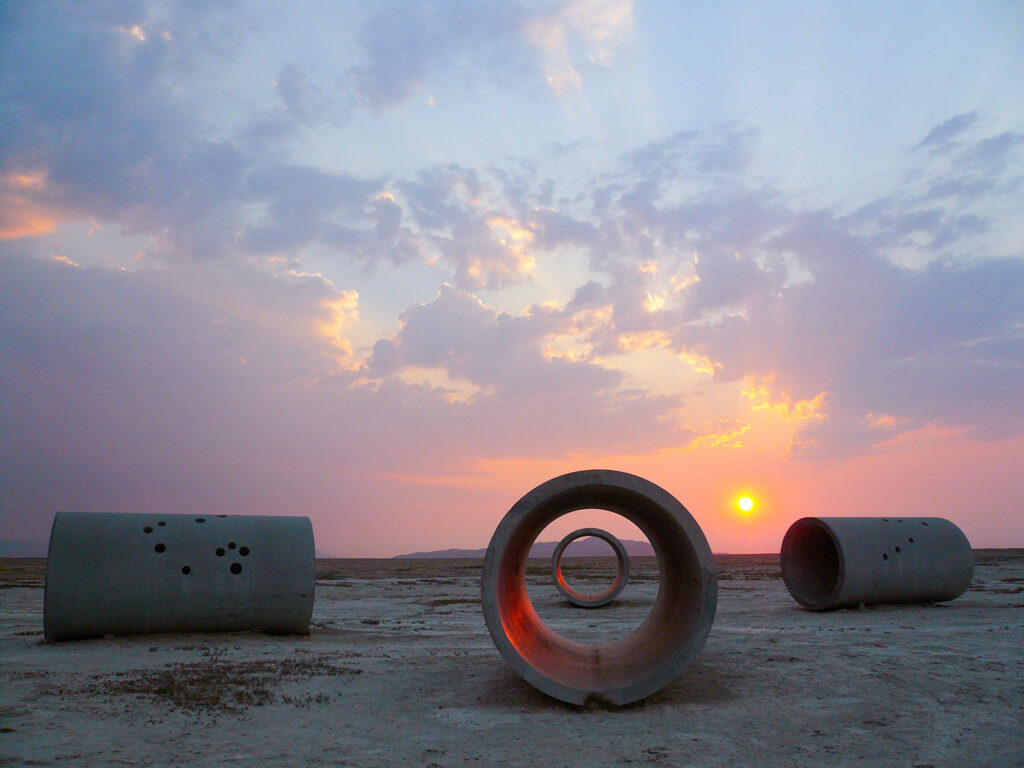
AMONG THE MOST celebrated and mythologized art movements of the 1960s and 1970s, land art emerged during a highly experimental and boundary-breaking era. This art-making coincided with the fraught social and political upheavals that characterized much of the American postwar period: the civil rights movement, environmental awareness, and the rise of second-wave feminism. With ties to minimalism and conceptual art, these artists placed less emphasis on the discrete object and turned their attention to the experience of the artwork—however fleeting or permanent that might be—foregrounding natural materials and the site itself to create works that were large in scale and located outside of typical urban art-world circuits.
For many years, historical art narratives of contemporary land art have been dominated by men: Robert Smithson, Michael Heizer, Walter de Maria, and others whose earthworks have shaped the movement’s definitions around monumentality, permanence, and the “blank” canvas of seemingly remote or unpopulated landscapes. Land art is all of these things, but it is not limited to them. This reductive characterization obscures the more subtle and less intrusive gestures that typify many examples of land art by women. The focus on men also positions land art as a tendency to control nature rather than collaborate with it, and it favors the destructive actions imposed on the landscape by artists like Heizer, who dynamited a Nevada mesa to create Double Negative (1969), over the subtler, more poetic, and collaborative works of Lita Albuquerque, Patricia Johanson, Ana Mendieta, and Jody Pinto, among others.
The focus on dominance and destruction as chief characteristics of land art also furthers sexist notions that land art required a degree of physical strength and “cowboy bravado” that, according to certain scholars, women artists lacked. Such assumptions belie the inherent physicality of much of the work highlighted in Groundswell: Women of Land Art, a sweeping exhibition that opened on September 23, 2023, at the Nasher Sculpture Center in Dallas, Texas. Beverly Buchanan’s concrete Frustula sculptures (ca. 1978) required heavy lifting to pour and cast concrete into molds of bricks. Mary Miss’ ambitious and intricate architectural construction Perimeters/Pavilions/Decoys (1977–78), featured an underground courtyard and three towers on the grounds of an expansive estate in New York and was built almost entirely by the artist and a pair of assistants. Nancy Holt’s Sun Tunnels (1973–76) required the artist to extend herself into the arenas of engineering, astrophysics, and computer technology to realize.
Featuring twelve American artists recognized for their sustained engagement with land art, Groundswell sheds new light on the vast number of land works by women whose careers ran parallel to their better-known male counterparts yet who have received less recognition and representation in museum presentations.
Groundswell: Women of Land Art is on view at the Nasher Sculpture Center through January 7, 2024. nashersculpturecenter.org