Bird
Hen House
Cage-free, free-range, farm fresh, organic. A plain reading of what the words on an egg carton are actually required to mean, and what they are not.
SINCE THE PASSAGE of the 1970 Egg Products Inspection Act, the Poultry Division of the Agricultural Marketing Service or the Food Safety and Inspection Service of the United States Department of Agriculture (USDA) has inspected egg products to ensure they are unadulterated and properly labeled. Beyond the basic labeling rules and the usage of “certified organic,” the U.S. government does not set definitions or requirements for egg-carton labels. Commercial producers and distributors are able to use terms such as “farm fresh,” “antibiotic free,” and “free range” when describing the actual eggs and the production process of the eggs (the welfare of the hens that lay the eggs) without having to adhere to a standardized definition.
Egg-product packaging is required to have labeling that includes: a statement of product (i.e. eggs), the name of packer or distributor, the date packed, and the official USDA inspection mark. All other labeling is optional.
Voluntary Labels
Terms such as cage-free eggs and free-roaming eggs can be used without any documentation because of the word “eggs.” This statement of identity is the only required labeling. Terms like Happy Hens and Animal Friendly are subjective and not defined by the FDA or USDA.
FARM FRESH: The definition of “farm fresh” is up to the individual states. For example, in Minnesota, use of the word “fresh” is limited to eggs of grades AA, A, and B quality that are not older than thirty days from the date of candling and grading. The term “fresh” or a similar term is not a substitute for grade designation. In Florida the term “fresh eggs” is allowed for eggs of Grade A or better quality.
LOCALLY PRODUCED OR LOCAL EGGS: These eggs must originate from the state they are in or a source flock or flocks located less than 400 miles from the processing facility.
BROWN EGGS: There is no nutritional difference between a white or brown egg. The breed of the hen determines the color of the pigments that are deposited on the egg as it makes its way through the oviduct.
VEGETARIAN-FED: Egg producers must maintain documentation that no animal byproducts are used to feed or water the source flock(s). Upon request, producers must provide documentation to a USDA representative.
NO HORMONES, NO STEROIDS, OR NO ANTIBIOTICS: Wording like “no added antibiotics” or “no antibiotics administered” means an egg producer may provide documentation of such claims. However, consumers could be misled into believing that eggs being labeled as antibiotic-free and hormone-free were produced in less cruel conditions. But that is not the case. Most eggs in the US are antibiotic-free, since antibiotics decrease egg production, and all eggs are hormone-free since it is illegal to give hormones to chickens.
ORGANIC EGGS: The term is not codified by either FDA or USDA/AMS. The term is misleading because for the label to read “organic eggs” the statement of identity is “eggs” not “organic.”
Certified Programs
Some egg producers voluntarily participate in private certification programs.
UNITED EGG PRODUCERS CERTIFIED is a voluntary program developed by United Egg Producers, an industry trade group that represents 90% of eggs produced in the United States. It exists to justify standard industry practices like intensive confinement. It recommends debeaking and forced molting by reducing protein intake and lighting.
CERTIFIED HUMANE and AMERICAN HUMANE CERTIFIED are voluntary fee-based certifications that do not require hens to have access to the outdoors. Debeaking without pain-killers is permitted.
ANIMAL WELFARE APPROVED is a voluntary, free certification and sets the highest standard for the treatment of egg-laying hens. It requires hens be given access to pasture, nest boxes, and dust baths, and prohibits debeaking. It permits the killing of male chicks.
What It Means
CAGE-FREE: Eggs must be produced by hens housed in a building, room, or enclosed area that allows for unlimited access to food and water, and provides the freedom to roam within the area during the laying cycle.
FREE-RANGE: A USDA term meaning the eggs come from hens that have some sort of access to the outdoors. However, it doesn’t mean that the hens actually go outdoors, or that the outdoor space is more than a small, fenced-in area; it simply implies that a door exists that a farmer could at some point open.
FREE-ROAMING: Designation that is associated with livestock animals; while free-range claims are associated with avian species. The USDA has adopted this position, but it is not codified in the regulations.
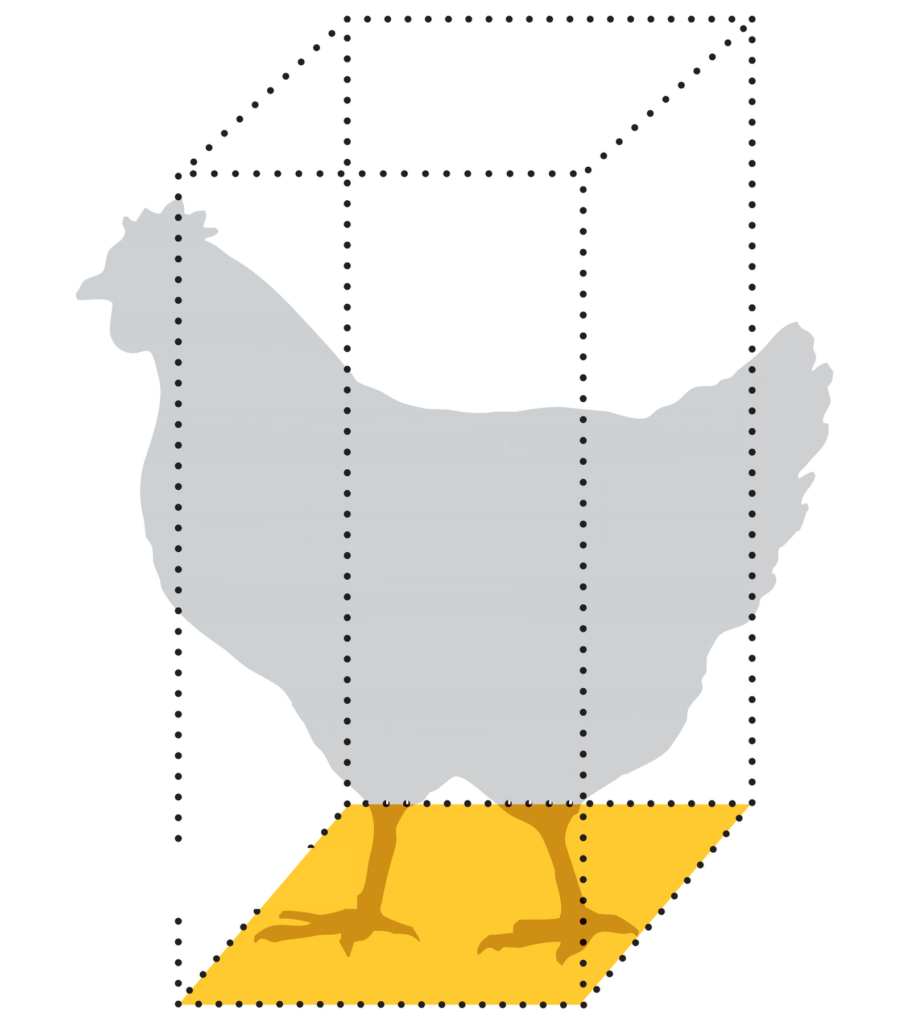
67 Square Inches
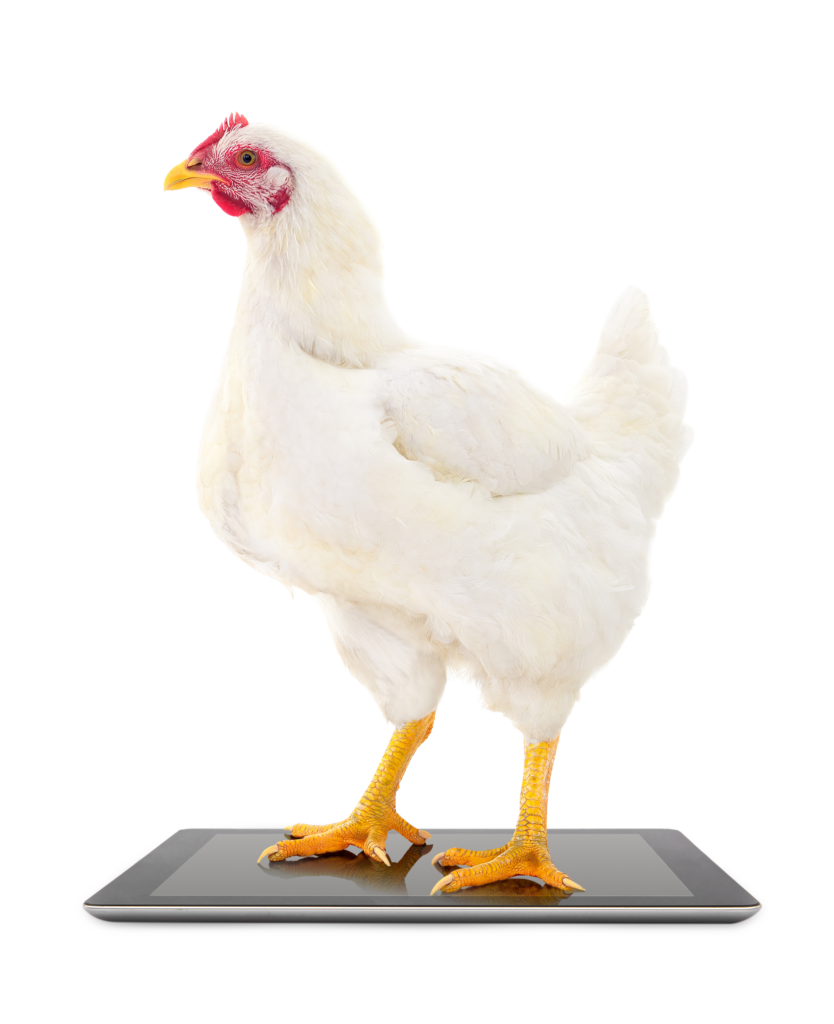
This is the average area of a hen battery cage. The space is roughly the size of an iPad. In this extreme confinement, hens are unable to spread their wings for the duration of their lives.
Artist’s Archive
New York-based photographer and painter Hanuk recently cracked open his 2014 series called Egg. Created using “oil on linen on oil on linen on oil on linen,” these layered works are playfully interpretive. Newer works can be seen at hanuk.com, Hanuk’s social outings at hanukhanuk.com, and regular musings on Instagram at @hanukhanuk. #throwbackthursday