ART + SCIENCE
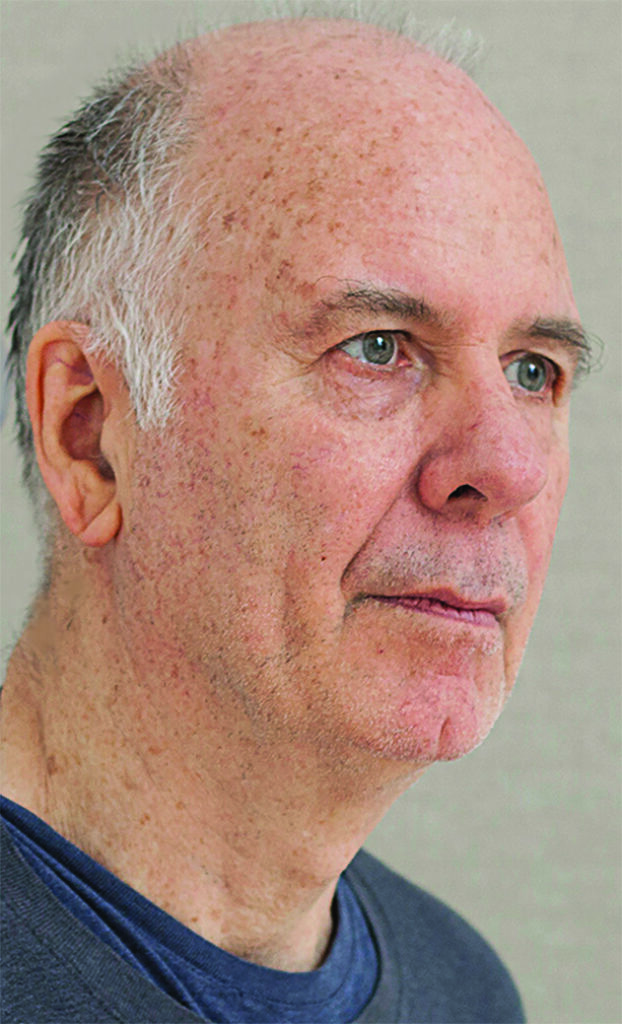
GENERALLY, TOM SHANNON sees “invention” and “art” as entirely separate. Unlike many contemporary artists, who look skeptically at the divide between utility and fine art, Shannon embraces their opposition. “To the degree that something is functional, it is less ‘art.’ Because art is a mysterious activity,” he says. “I really distinguish between the two activities. But I can’t help myself as far as inventing, because I want to improve things.”
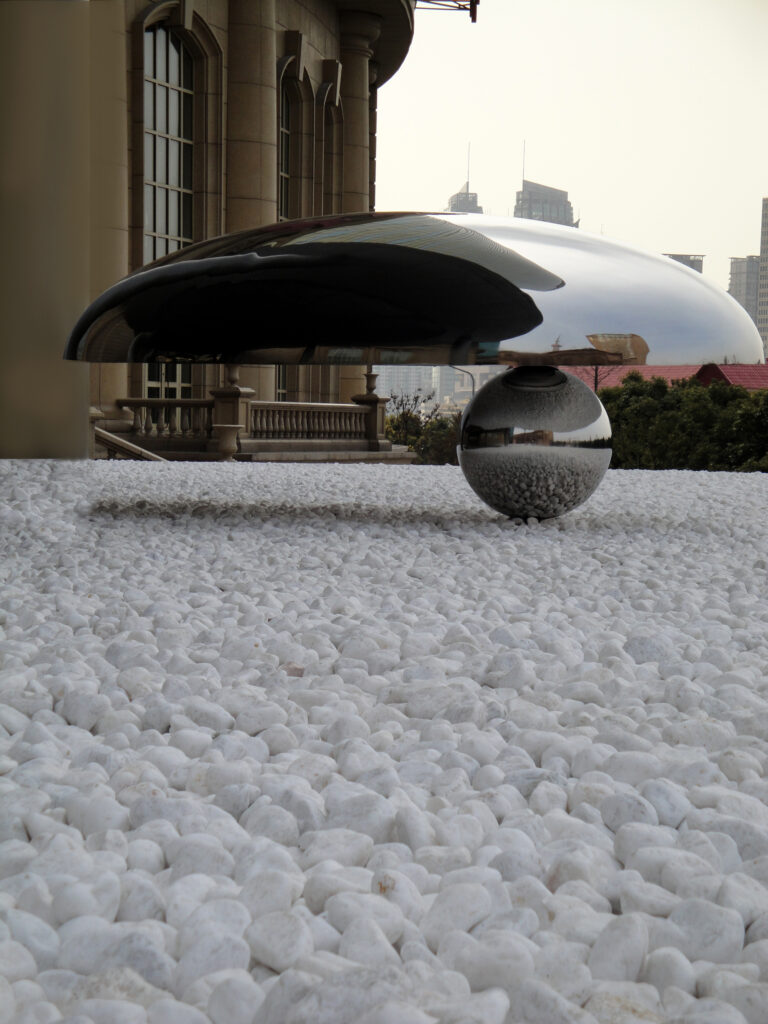
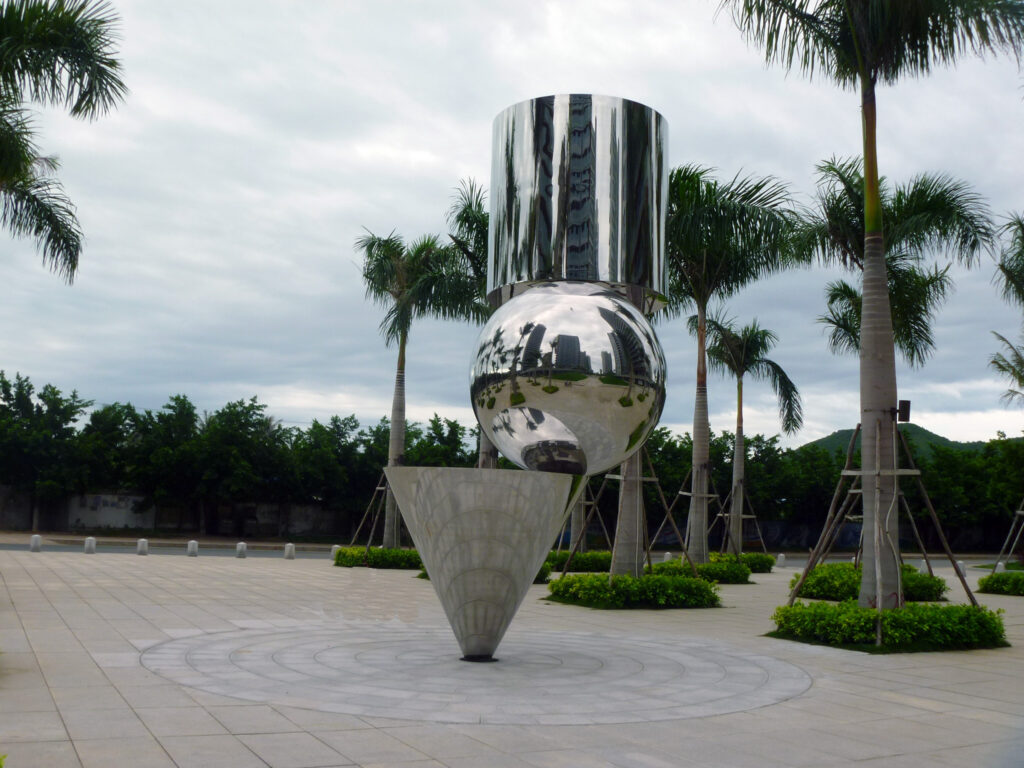
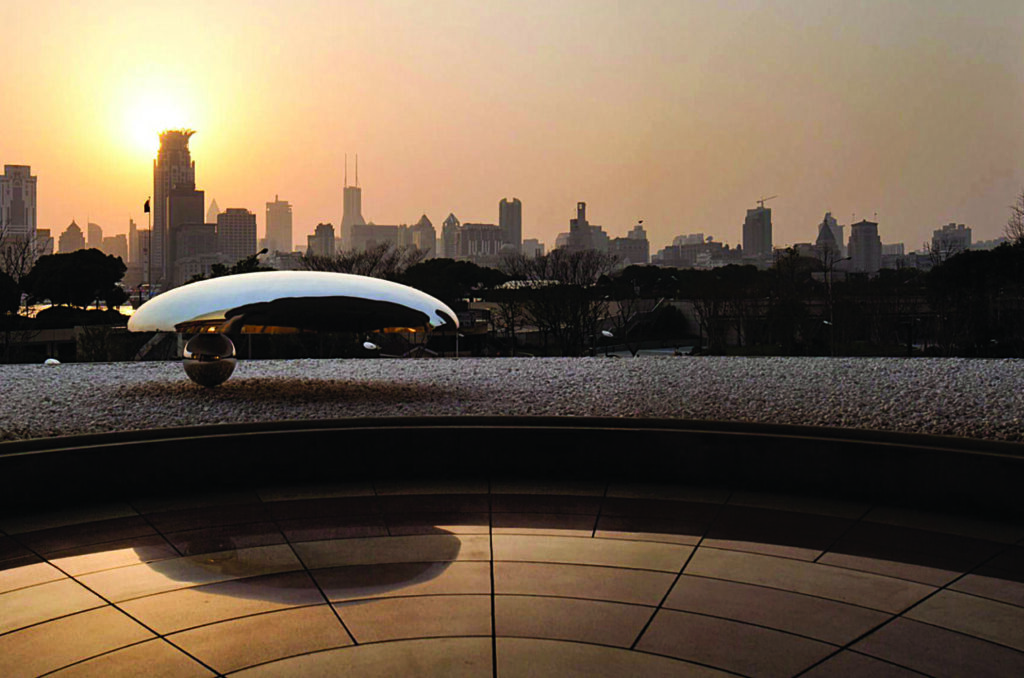
SHANNON’S CAREER WAS launched at a young age, after a sculpture he made at nineteen was included in the 1968 show The Machine as Seen at the End of the Mechanical Age, at the Museum of Modern Art in New York. He received his MFA from the Art Institute of Chicago, where he studied under luminaries like Stan Brakhage, before moving to New York in 1971. Since then, his sculptures, paintings, and works on paper have been seen in esteemed exhibitions and institutions such as the Venice Biennale, the Centre Pompidou, and the Whitney Museum.
As part of his sprawling art practice, Shannon tends to ideate about technology and feats of engineering. “Sometimes an idea occurs to me as a result of making art,” he says. Those ideas sometimes turn into processes and machines that are later patented, as was the case with his tactile telephone and an early model of cathode-ray-tube color projector.
It’s a process that also led to an idea for a synchronous world clock. After he became intrigued with the ratio of the earth to the sun (a recurring theme in his work), Shannon realized he was on his way to making a world clock, and “it went from being an artwork to a design project,” he says. Shannon and collaborator Buckminster Fuller created a limited edition of twenty World Clocks in 1983, and the clock was patented in 1984.
But alas, many of Shannon’s inventions have remained in the realm of ideation. His tactile telephone, despite being ground-breaking for the 1970s, was never fabricated on any scale. Nor was Air Genie: Video Airship, a flying, interactive robot that would have functioned as teacher, documentarian, boom box, and DJ, among other roles.
Fortunately, Shannon has had more luck creating his engaging—and often interactive—artworks. For his most recent commission, Finity, he will construct spinning sculptures of the five “ancient polyhedrons,” also sometimes known as Platonic solids after the philosopher who was believed to have first identified them. The artwork, which will stand around twenty-five feet high at the front of Kirkpatrick Center’s Science Museum Oklahoma, takes its name from the fact that these shapes are the only “regular” convex polyhedrons possible in three-dimensional space, “regular” means each facet is of identical size and shape. They embody finiteness, or a known and absolute restriction to what is possible. This constitutes fundamental knowledge about our universe.
In antiquity, these five shapes—the tetrahedron, cube, octahedron, dodecahedron, and icosahedron—were paired with the five elements: fire, earth, air, water, and the cosmos. The elements were key to the development of geometry and mathematics, Shannon says, which are the disciplines that underlie all Western science. “It seemed like a very
good symbol for the front of a science museum,” he adds. This commission, funded by the Kirkpatrick Family Fund, should be completed shortly after the premiere of Shannon’s show, The Art of Tom Shannon: Universe in the Mind | Mind in the Universe, which opens November 16, 2019, at the museum.
To the degree that something is functional, it is less ‘art.’ Because art is a mysterious activity.
Despite its size, the engineering for Finity won’t be difficult, according to Shannon. The sculptures will be arranged vertically, sprouting from a subterranean cement block. They’ll also be tactile and interactive, allowing museum visitors to touch and spin the polyhedrons, and see how they affect the other spheres. “I love when art has that engaging component, where you can participate,” says Julie Maguire, private curator to Christian Keesee, president of the Kirkpatrick Family Fund. “With so much art, you aren’t allowed to touch it. You’re supposed to stand away from it.” Keesee and Maguire had followed Shannon’s work after stumbling upon an image of a Shannon sculpture eight years ago at the Château la Coste in Provence, France. Luckily, they were able to find this ideal commission for him.
“His artwork fits perfectly into the mission of the smArt Space gallery,” says museum planning and design director Scott Henderson. The gallery focuses on “how the intrinsic relationship between art and science can expand upon what we know and can act as a medium for exploring and forming new information and ideas.”
Art and invention will be thoroughly intertwined at Shannon’s exhibition, which will feature design works such as a revised iteration of his World Clock, as well as four or five new artworks exploring “the poetics of cosmology.” Other pieces include two artworks from Shannon’s Rays series, which looks at the proportions of the sun and earth and the earth and moon, and Compass Array, a sculpture of magnetic spheres that independently orient to the earth and will fill the museum’s lobby. One wall will be entirely dedicated to Shannon’s previous paintings, drawings, and sketches, some “fully actualized, some not,” as Henderson puts it. But with an intuitive artist and engineer like Shannon, sometimes the impossible is even more interesting than the fully realized.