COPENHAGEN IS INTERNATIONALLY renowned for high-octane contemporary art, architecture, and design, all of which are flourishing in several world-class institutions. Not only do stellar organizations like the Louisiana Museum of Modern Art, Arken Museum of Modern Art, and Copenhagen Contemporary have fascinating permanent collections and excellent temporary exhibitions, each one inhabits a superb building in an outstanding location.
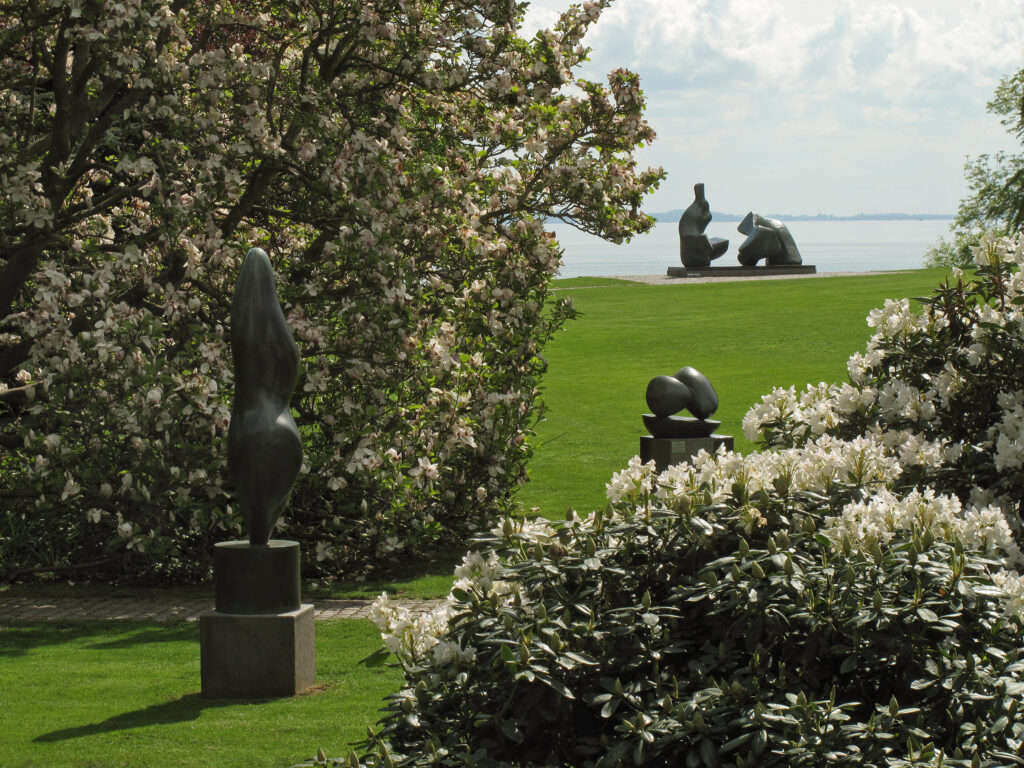
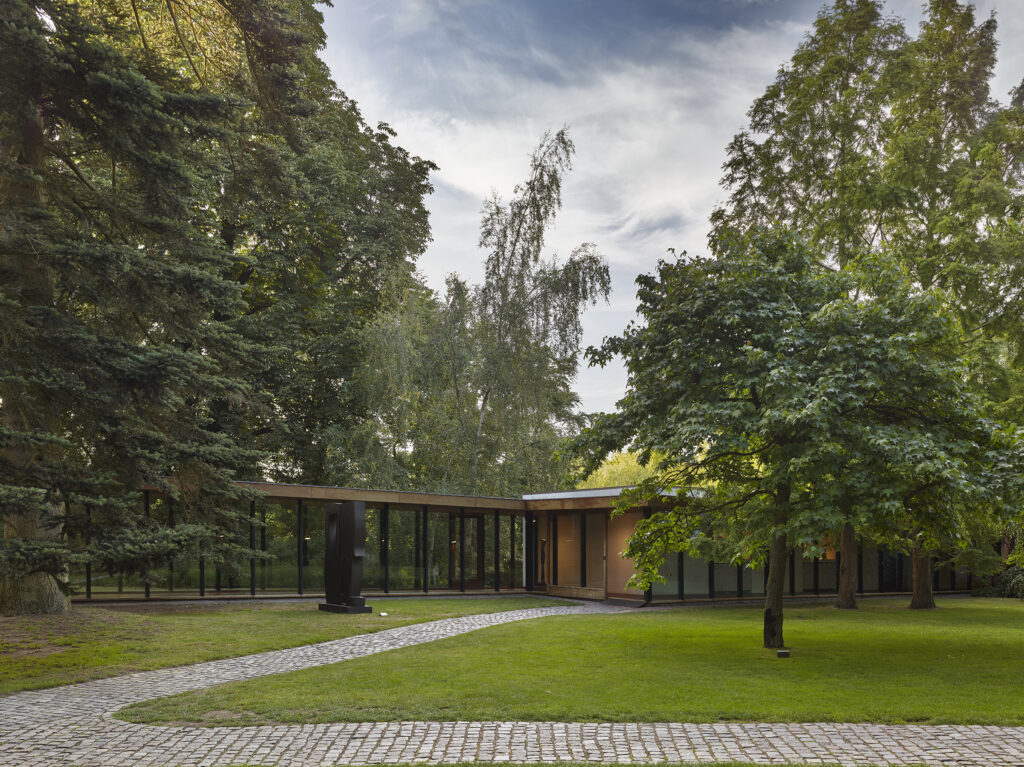
Founded in 1958 by a businessman, Knud Jensen, the Louisiana now attracts around half a million visitors during a normal year. People flock there to see classic works by Alberto Giacometti, Asger Jorn, Yayoi Kusama, Henry Moore, Max Ernst, and Alexander Calder, some of which withstand the elements outside in the sculpture park, while others reside inside the museum in climate-controlled bliss, but almost always in spaces referencing nature’s external presence. In the Giacometti Gallery, an all-glass, floor-to-ceiling wall with a view of willow trees and reflections of water beyond provides the setting for works such as Walking Man, Large Head, and The Forest, allowing nature to lend Giacometti’s bronze masterpieces even more vigor and potency.
Paintings in the collection by living and deceased art world giants Francis Bacon, Gerhard Richter, Pablo Picasso, Ai Weiwei, Cindy Sherman, Louise Bourgeois, Franz West, and David Hockney, among others, are on permanent or rotating display, and mixed in unusual combinations that guarantee the visitor some unexpected, gasp-a-minute visual encounters which surprise and delight. But it is the temporary exhibitions that give the Louisiana the chance to take risks by bringing a special focus on contemporary art.
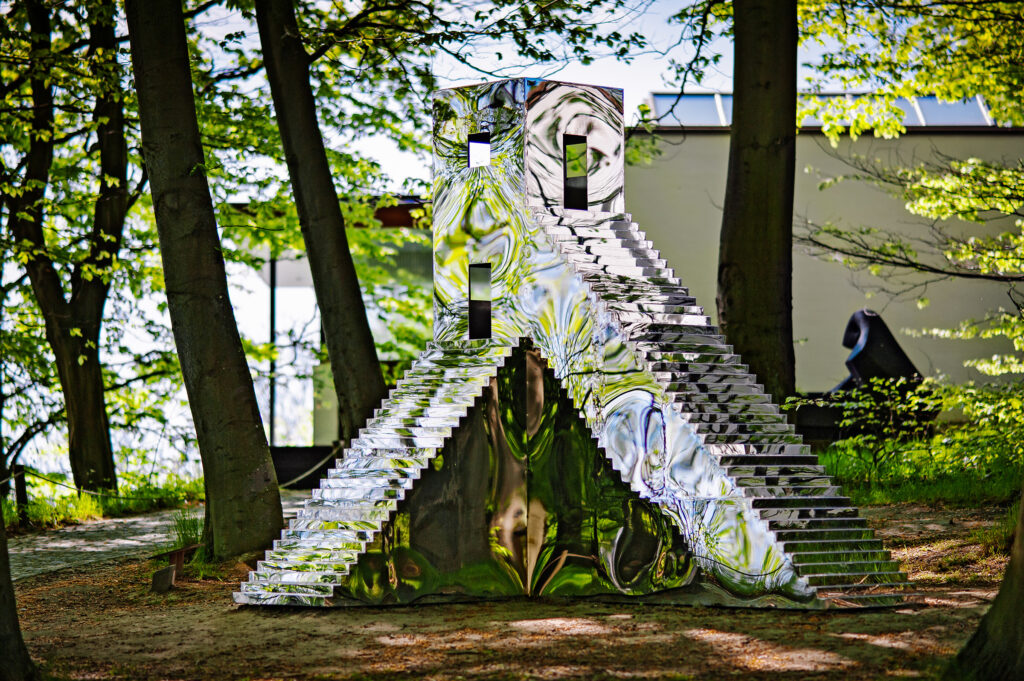
The Louisiana lies by the Øresund coast in the North Zealand region and sits in a leafy park high above the sea with stunning views and coastal panoramas. Arken is on an island in Køge Bay, south of Copenhagen, occupying a vast building that resembles a ship, neatly reflecting its marine and sand-dune site. Copenhagen Contemporary, unlike the other two, does not attempt the same sophisticated interplay between architecture and nature, but instead successfully blends a former welding hall of 7,000 square meters with an industrial backdrop on Refshaleøen Island, an area which has become a popular and bustling cultural district with a food market, gourmet restaurants, and traditional saunas.
One such recent show of work by Argentine-Israeli artist Mika Rottenberg, Bowls Balls Souls Holes—spanning film, installation, sculpture, and drawing—managed to be simultaneously baffling, humorous, surreal, and moving, with its component parts acting as critical and absurd allegories of the human condition. A film showing factory women sorting pearls according to their quality, shape, and color with astonishing speed, endurance, and dexterity forces the viewer to confront the lives and working conditions of those who provide luxury goods for the world’s elite.
Some insistently physical sculptures move, emit smoke, or invite museum-goers to push levers and pedals and activate machinery, linking them directly to films being shown. Strange sights and sounds are omnipresent, whirling us into labyrinthine processes, where commodities are manufactured in one big bizarre hamster wheel, illuminating society’s obsession with material abundance.
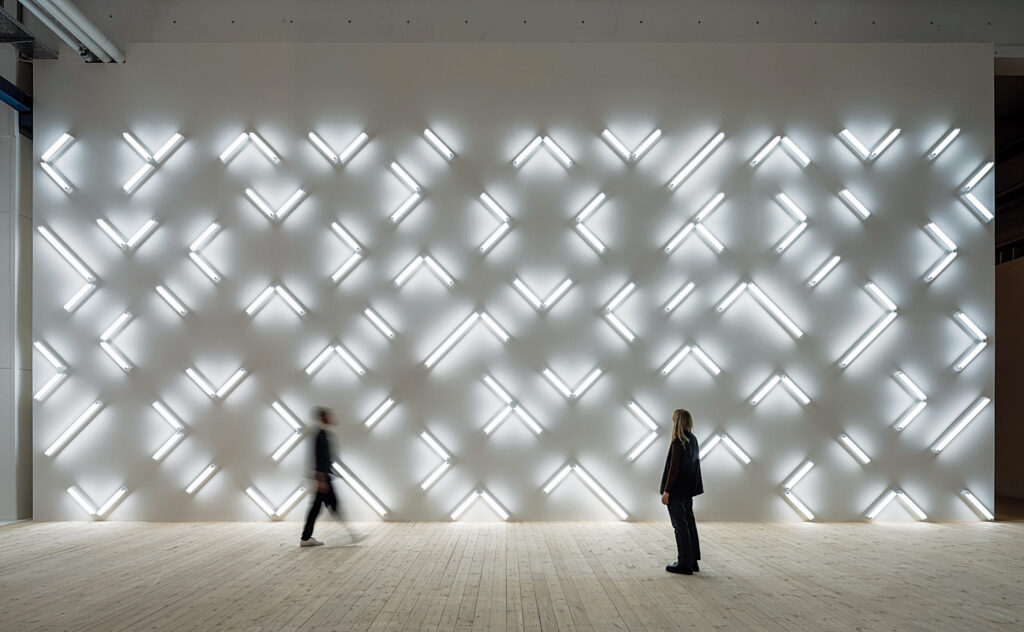
Light and Space at Copenhagen Contemporary runs until September 2022, a deservedly long stint for an exhibition of art of this caliber. Features historical and contemporary works from seminal American artists of the Light and Space movement arising from Los Angeles in the 1960s. Collectively, there’s an array of art megastars—Larry Bell, James Turrell, Robert Irwin, Helen Pashgian, Bruce Nauman, Doug Wheeler, and Mary Corse—whose works dazzle and shine at every turn. With the use of fiberglass, epoxy, and coated glass, the artists have created works that are sleek, reflective, minimal, and enduringly modern.
The American artists blazed a trail for a younger generation of European artists like Anish Kapoor, Olafur Eliasson, Ann Veronica Janssens, and many others. For sheer volume and quality of artworks, visual stimulation and intergenerational appeal, this exhibition meets the demands of the most discerning and rigorous of critics.
Mary Ann Prior is a writer and curator living in London.