The Rise of Contemporary Art in the United Arab Emirates
Parts of the Middle East are having some serious moments in the limelight. On the sporting front, Qatar hosted the World Cup in November and December 2022, attracting visitors from all corners of the globe. These mega-events and aspirations spurred the United Arab Emirates to duke it out for new art fairs in the same year.
PARTS OF THE MIDDLE EAST are having some serious moments in the limelight. On the sporting front, Qatar hosted the World Cup in November and December 2022, attracting global attention. Next door, international cultural aspirations spurred the United Arab Emirates to stage not one but three art fairs in the same year, which took place in the most well-known of its seven emirates: Sharjah, Dubai, and Abu Dhabi. Not bad considering Qatar is the size of Connecticut but with three quarters of its population. Meanwhile, the United Kingdom is almost three times the size of the UAE. So, what is happening?
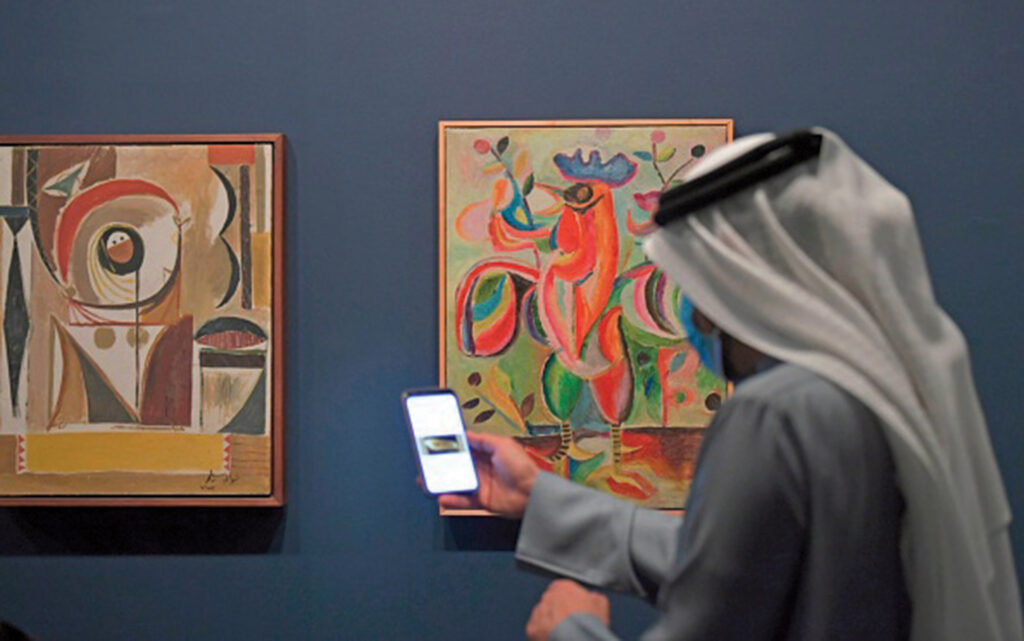
The ruling sheikhs of the UAE have long foreseen the time when their oil reserves would run out, and therefore the need to diversify into new revenue streams became a top priority. They have wasted no time, nor a dirham of their wealth, in tackling the issue, mainly by investing unprecedented amounts of money in property and tourism. Despite accusations of human-rights violations, “artwashing,” and “sportswashing,” they’ve been hugely successful. Geopolitical tensions are undeniable and yet art and sport, sun and sand, shopping and tax concessions have proved to be enormous draws for foreign companies and individuals. The UAE thinks big and bold, sometimes brash, but the results speak for themselves.
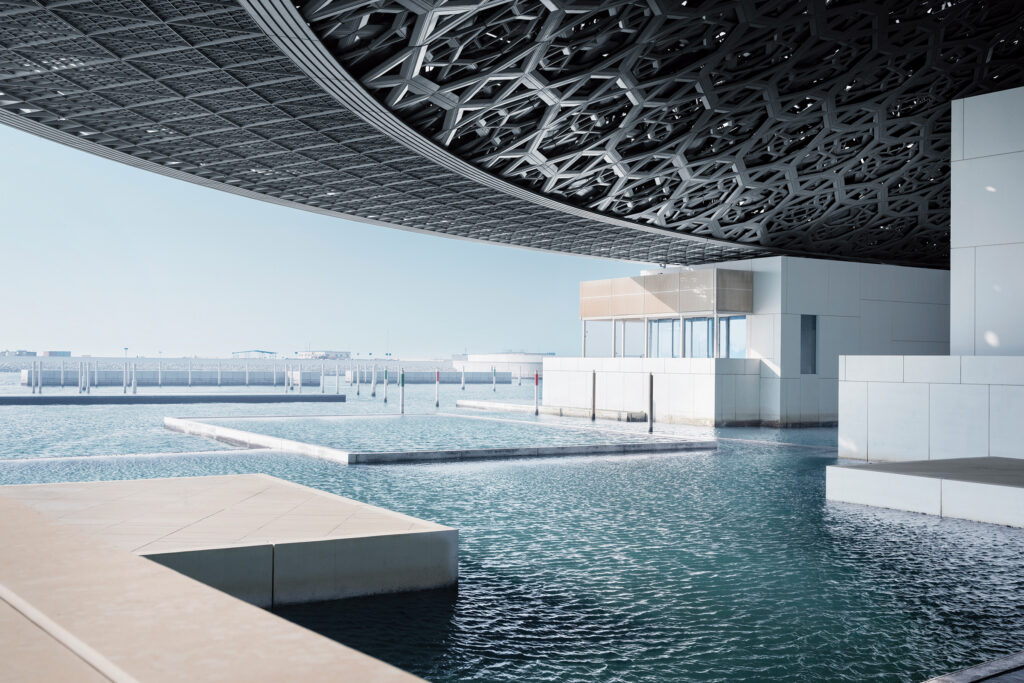
Take the Abu Dhabi Art Fair 2022 that took place at Manarat Al Saadiyat, a cultural space labeled a “Gateway to the Arts.” Located in the same area as the landmark Louvre Abu Dhabi are the future premises of Guggenheim Abu Dhabi and the Zayed National Museum; the art fair has become part of this cultural mecca. It attracted a record number of diverse galleries this year—eighty from twenty-eight countries—confirming former Guggenheim director Thomas Krens’ description of the Middle East as one of the world’s most exciting and important emerging regions in contemporary art. It is indeed hugely exciting. The UAE’s outpost Louvre—a stunning confection of great beauty incorporating the play of light from sky and sea—is visible from the art fair site, as are the construction sites of Frank Gehry’s Guggenheim and Norman Foster’s Zayed National Museum, both of which promise to be equally impressive desert behemoths when they open in 2025.
The fair naturally benefits from visitors who are in the UAE specifically to buy art, but also other cultural tourists who might do so spontaneously. Having seen the Louvre Abu Dhabi, why not check out the fair too and scout out the offerings? The strategic proximity of museums to the Abu Dhabi Art Fair is an enormous advantage to it and also to Dubai’s and Sharjah’s fairs because, though farther away, these emirates can easily be absorbed into the itinerary of any art lover passing through the region.
Galleries see these advantages, too. The 2022 Abu Dhabi Art Fair saw the participation of foreign exhibitors from Switzerland, Tunisia, Turkey, France, India, the US, the UK, South Korea, Spain, Morocco, and South Africa which joined local galleries from the UAE. During the same week as the fair, Perrotin Gallery (with locations in Paris, Hong Kong, Seoul, New York, and Las Vegas) opened its new space in the Dubai International Financial Centre, with a pop-up space in ICD Brookfield Place showcasing work by Takashi Murakami.
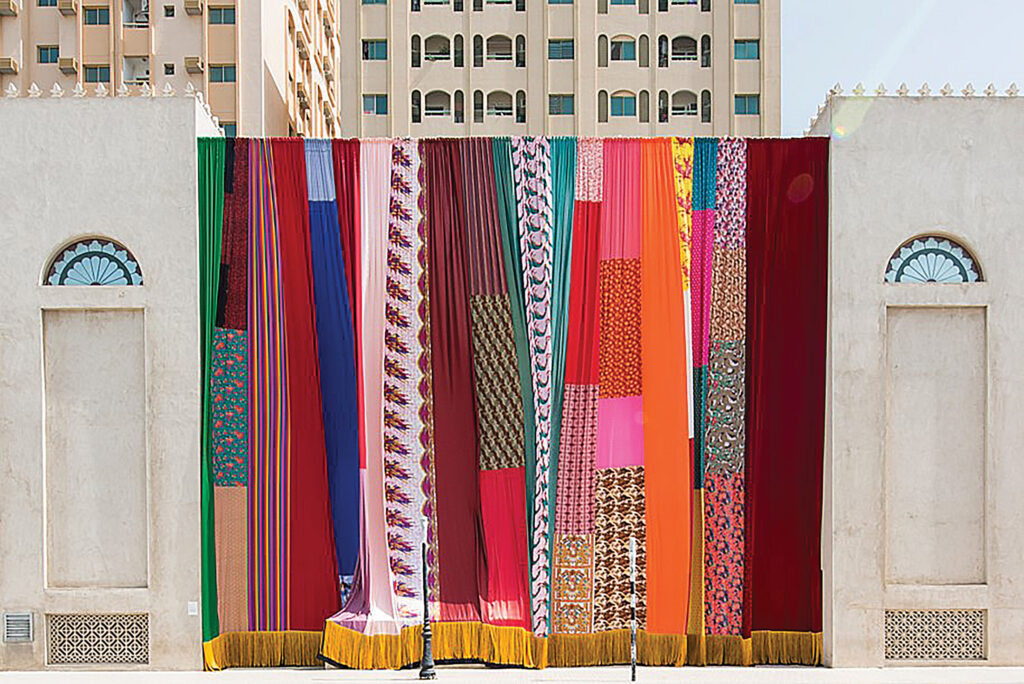
As an antidote to the enormous wealth, general glitz, expensive cars, super-cleanliness, and soaring, deluxe skylines of Dubai and Abu Dhabi, there is Sharjah. Just a twenty-mile drive from its neighbor Dubai, Sharjah is quieter, even tranquil, and it seems poorer, dustier, and more traditional with low-rise buildings and fewer crowds. Don’t let this slower pace and more solemn atmosphere fool you, though; art in Sharjah is taken very seriously, thanks to His Highness Sheikh Dr. Sultan bin Muhammad Al Qasimi, member of the UAE Supreme Council and the ruler of Sharjah, who has overseen numerous cultural developments in the emirate since the 1970s. The emirate’s well-respected Sharjah Biennial started in 1993, fourteen years before Art Dubai, and has always been acknowledged as a well-considered undertaking with serious intellectual heft. In 2003, it was reconfigured by Sheikh Muhammad’s daughter, Hoor Al Qasimi. She also, in 2009, established and became president and director of the Sharjah Art Foundation.
Al Qasimi’s foundation does a great job of cultivating diverse narratives on global art from a multiplicity of viewpoints. Yet when I visited its hugely impressive and humorous exhibition Pop South Asia: Artistic Explorations in the Popular, I was the only visitor, bar one. With its fabulous building and excellent program, the miniscule audience came as a big surprise although, for a sole viewer like me, was something of an unexpected luxury. The same situation prevailed at the equally high-quality Sharjah Museum of Islamic Civilization on the Majarrah Waterfront by the banks of the Sharjah Creek. Again, a scenic setting, magnificent building, and beautiful exhibition—Sacred Works, Timeless Calligraphy: Highlights of Exceptional Calligraphy from the Hamid Jafar Qur’an Collection—and yet this time, I was the only visitor enjoying the immense privilege of seeing a vast array of manuscripts spanning fourteen centuries of Islamic calligraphy from China to North Africa.
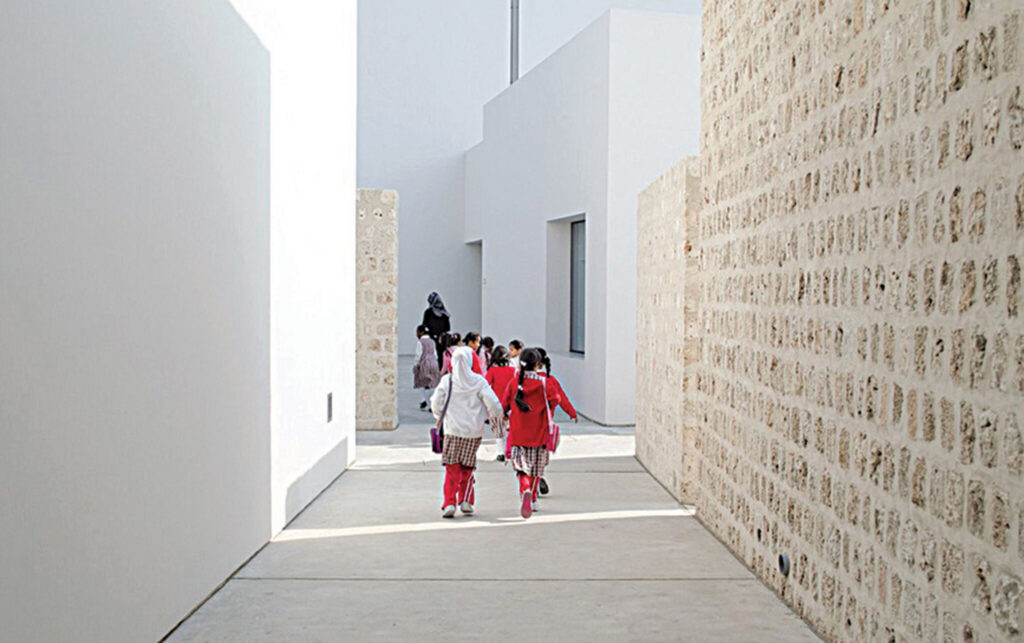
Notwithstanding buildings devoid of an audience, the cultural institutions in Sharjah are of enormous value to schoolchildren, students, and adults through their well-funded educational programs. The Sharjah Art Institute runs inclusive courses in painting and drawing, ceramics, engraving, and printing, as well as film screenings, lecture series, and courses in contemporary-art appreciation. This is an ideal place to perfect a portfolio in preparation for an even wider range of subjects available at the University of Sharjah’s College of Fine Arts and Design. Here students can study fashion and graphic design, multimedia and interior design. Additionally, the American University of Sharjah offers degrees in architecture, urban planning, visual communication, and design management.
By supporting education, encouraging freedom of expression, providing topflight exhibitions, hosting art fairs, and welcoming new commercial galleries, the UAE is giving a voice to artists who, collectively and rightly, seethe at reports of exploited workers, environmental destruction, and human-rights abuses. Their desire is to transform the status quo. While the cultural and political are hard to separate in the Middle East, if there is any group that can bring about societal change, it is the artists, inshallah.