Magic City
TULSA IS A JEWEL OF A CITY WITH PLENTY OF ARTS AND CULTURE THAT WILL SURPRISE EVEN A LOCAL.
BY Abby Kurin
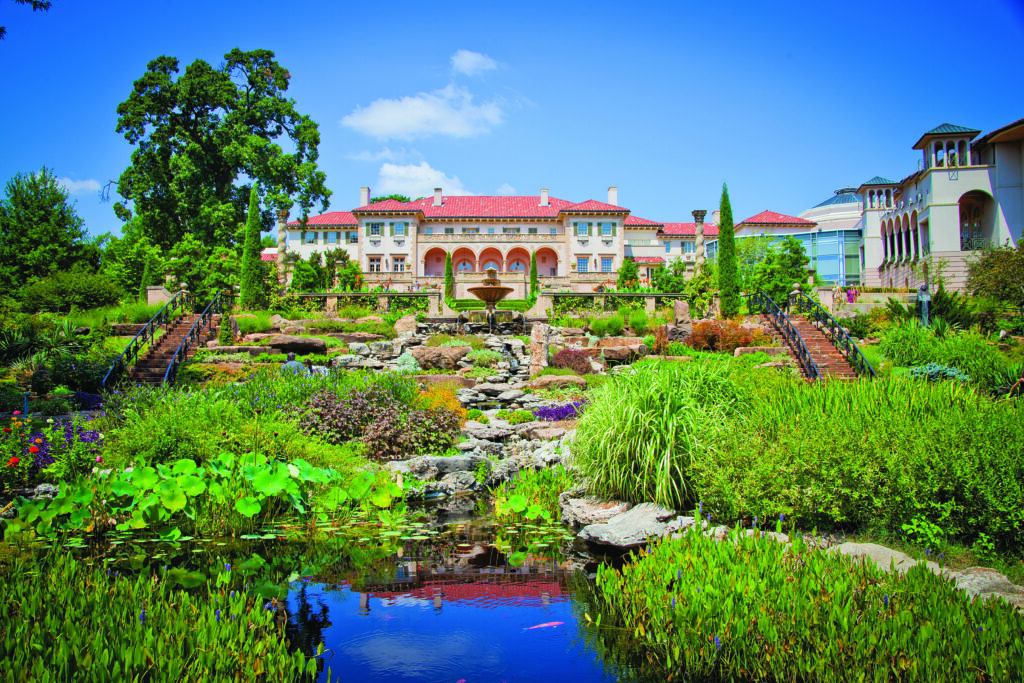
EVEN IF YOU’VE been to Tulsa recently, you should make plans to return. The city is changing with visionary ideas and large investments, and at its core is the ever-evolving art scene, a major contributing factor to Tulsa’s vibrancy.
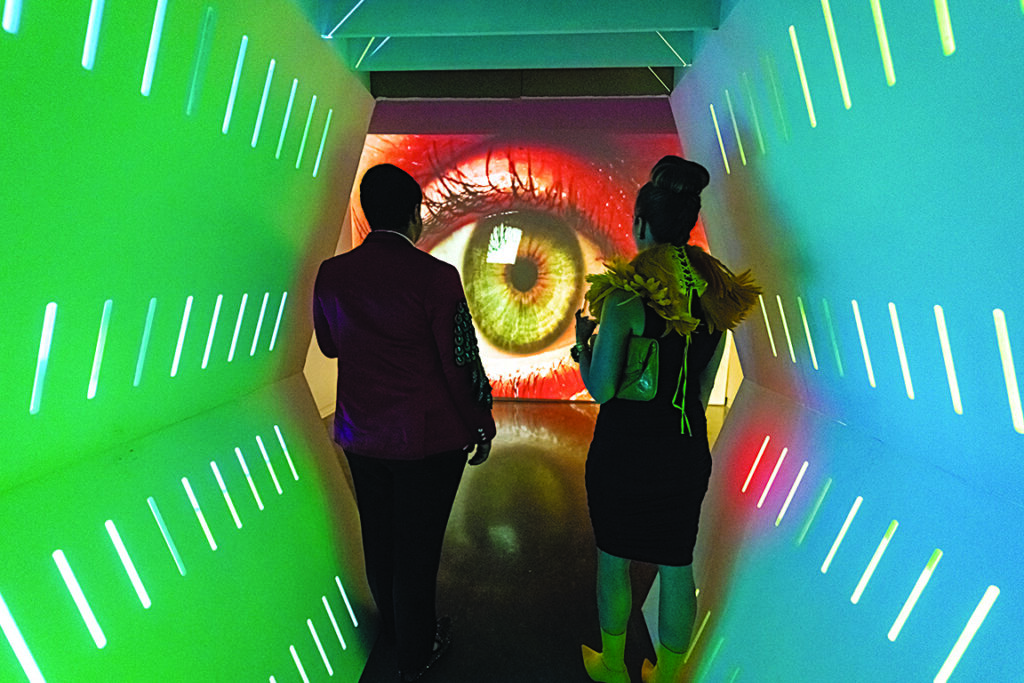
North of downtown, the Tulsa Arts District features an array of art galleries, art-infused local businesses and the monthly First Friday Art Crawl. Texture is examined at 108 Contemporary with a glasswork exhibition by Beth Lipman, on view through May 26, and neon artist Todd Sanders highlights Route 66, on view from June 7 until July 21. At the Arts and Humanities Council of Tulsa, immerse yourself in The Experience, a large-scale, multimedia display taking over the entire second floor of AHHA’s ultra-modern building. Down the street, celebrating its fifthieth anniversary is the contemporary art mainstay Living Arts.
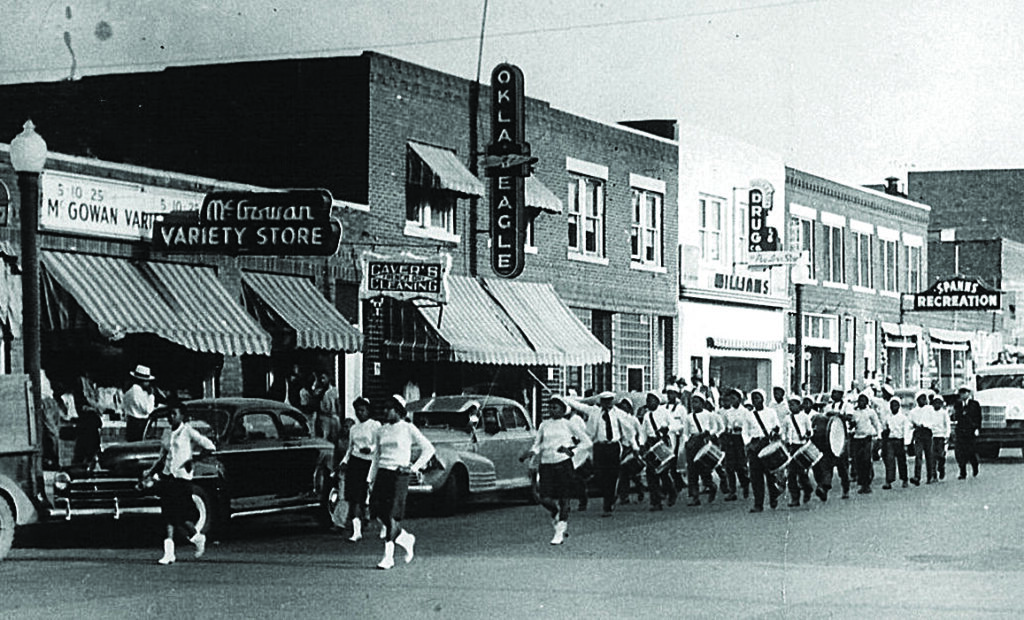
East of the Tulsa Arts District is the Greenwood District. Historically known as Black Wall Street, this area was once the richest African American district in the US, until the 1921 Tulsa Race Massacre. The history and stories of this neighborhood can be found at the Greenwood Culture Center, along with photography exhibitions throughout the year. On historic Greenwood Avenue, the newly launched Black Wall Street Arts Gallery opened in September The Conciliation Series brings together various artists of diverse backgrounds.
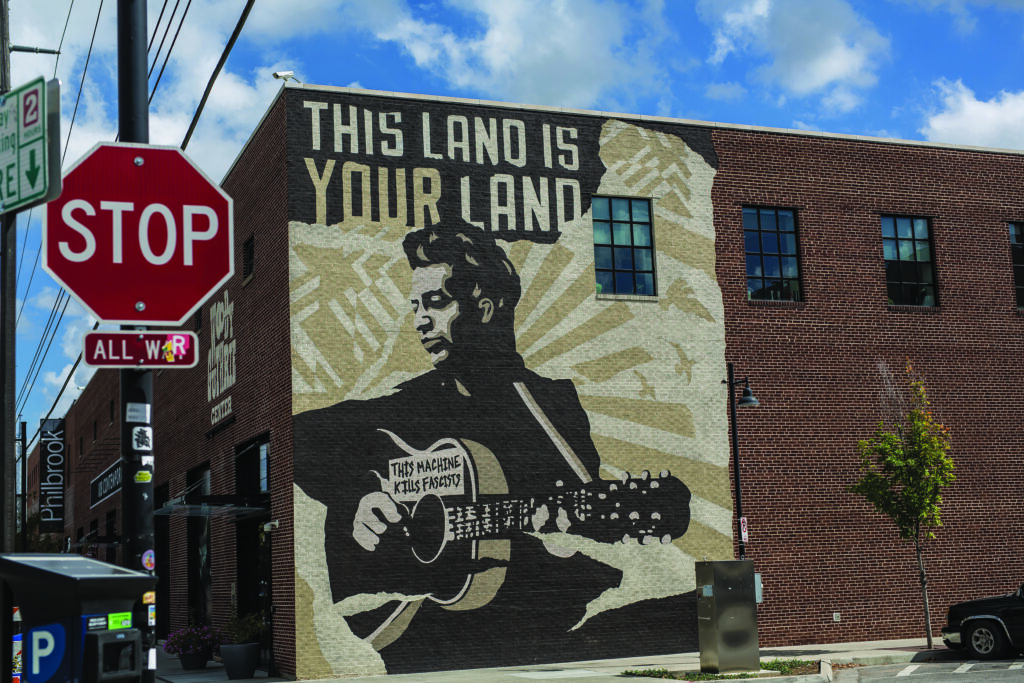
Another thriving arts district is Kendall Whittier. Home to many local businesses, this place oozes creativity and inspiration, all while maintaining a small-town, Main Street charm. Local art vendors and gallery shows are featured during the inaugural Kendall Whittier Art Festival, April 11–13, 2019. Circle Cinema, the only independent movie theater in Tulsa, also houses a gallery in its lobby with artwork that changes monthly.
Philbrook Museum of Art and the Gilcrease Museum are two art institutions in Tulsa that cannot be missed. The Gilcrease is northwest of downtown and is in the planning stages for its $75 million renovation through the City of Tulsa Vision funding package. It’s also home to the largest collection of art from the American West. In the heart of midtown is Philbrook. An Italian-style villa that was once the home of oilman Waite Phillips, the building has been transformed into an art lovers’ paradise. Pop into the Italian Room to see the newly acquired Kehinde Wylie piece Equestrian Portrait of King Philip IV. Philbrook recently sold a rare eighteenth-century Chinese vase that had been in storage for $14.5 million, so expect to see new pieces here soon.
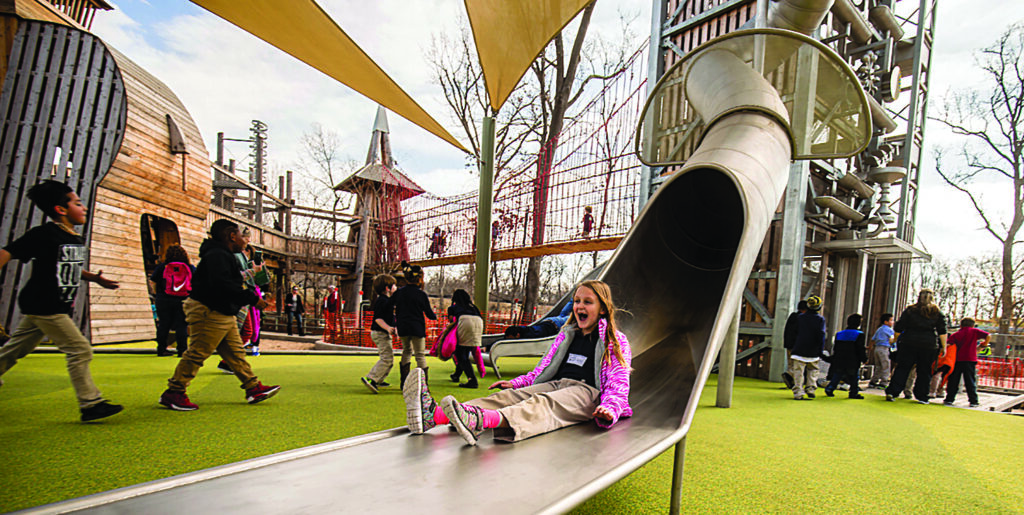
The cherry on top of this arts city is the newly opened public park Gathering Place, a $465 million gift from the George Kaiser Family Foundation, the largest private donation to a public park in US history. Opened in September 2018, the park was recently named the number-one new attraction in the US by USAToday. Art is integrated throughout the park, and Oklahoma art specifically is being selected by Jennifer Scanlan, the curatorial and exhibitions director at Oklahoma Contemporary Art Center. While you’re exploring the grounds, take part in one of the numerous activities, or use the sports courts or BMX tracks.
“In Tulsa, we know the importance and impact the arts can have in a community and how they can bring people together,” says Tulsa mayor G.T. Bynum. “As a city, we are making intentional investments to create diverse and vibrant destinations throughout our city. In addition to our extensive collection of art deco architecture throughout downtown, Tulsa is home to two world-class museums and America’s best new attraction, Gathering Place. All of this speaks to our belief that the arts can transform the lives of city residents for the better.”
Civic Matters
THE GREENWOOD ART PROJECT RECEIVES A $1 MILLION GRANT
A NEW SERIES of public art installations will commemorate the history of Tulsa’s Black Wall Street. Tulsa won the Bloomberg Philanthropies 2018 Public Art Challenge, a $1 million award to fund installations that honor the legacy of the Greenwood District and reflect on its past.
In 1921, Black Wall Street endured a series of violent, racist attacks that resulted in the deaths of more than 100 black residents and left thousands displaced after a mob set fire to the area. In a report released in 2001 by the 1921 Tulsa Race Riot Commission this incident was described as “the [worst] civil disturbance since the Civil War.” The Greenwood District would later be affected by the consequences of gentrification projects, including the construction of a major interstate that split the community.
The Greenwood Art Project says Tulsa mayor G. T. Bynum, aims to bring people together through meaningful connections and a deepened understanding by elevating the community’s stories through art. “Art compels us to confront truth, and art helps resonate important messages,” he says.
Artist Rick Lowe will collaborate with Tulsa artists to create eight public works on historically significant sites, including the John Hope Franklin Reconciliation Center and the Greenwood Cultural Center. Lowe is known for community-engagement projects like Project Row Houses, in Houston, Texas, which provides public programming to marginalized communities.
Anita Contini of the Bloomberg Philanthropies Art Program says the challenge is meant to encourage communities to consider arts and culture as contributing factors to development and civic goals. “Through our experience working with artists and cities, we know the unique ways that public art can bring communities together and enhance the spaces where we live, work, and play,” she says. “The Greenwood Art Project will use the process of art creation to celebrate the historic contributions of Black Wall Street and explore a complicated past in order to make the future better.”
JASON LEE: From LA to T-Town
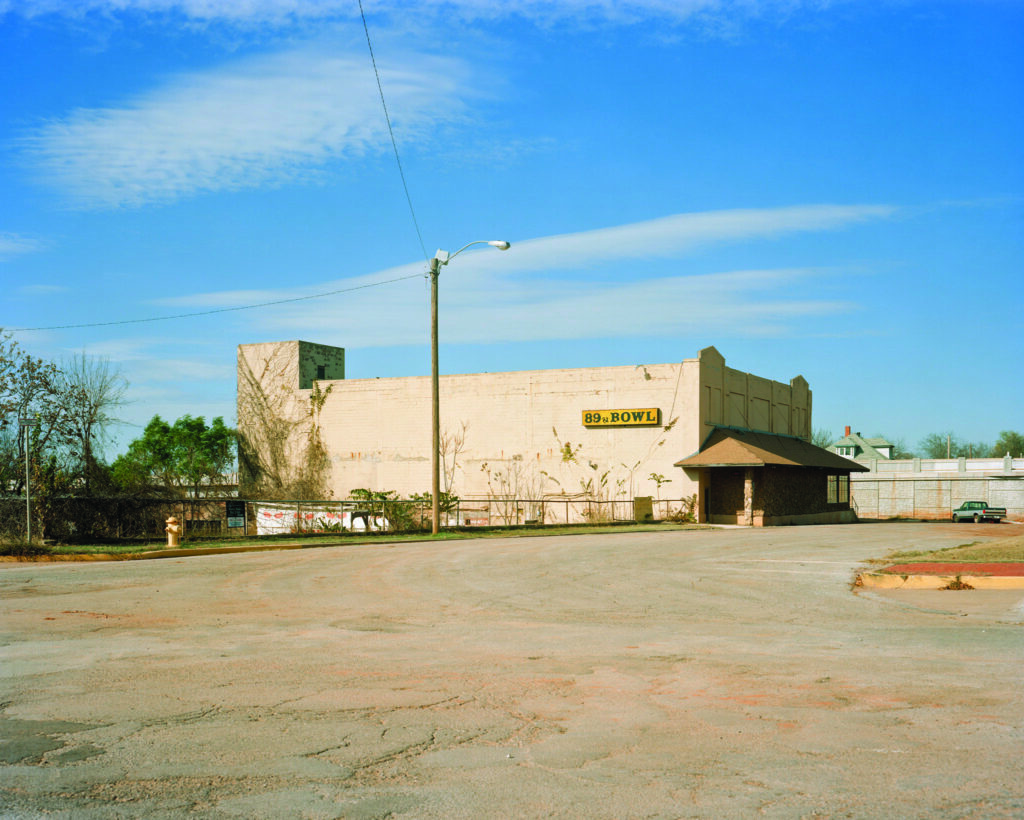
From professional skateboarder to actor, director, and now internationally exhibited photographer, Jason Lee (My Name Is Earl, Chasing Amy) doesn’t merely dabble in fascinating roles. Here, ArtDesk contributor Kelly Rogers talks to Lee about his upcoming solo exhibition at the Philbrook Downtown in Tulsa which he showcases images of the city’s many angles.
Photographs by Jason Lee will be on view June 1 through November 10, 2019, at Philbrook Downtown. philbrook.org
Kelly Rogers: How did your connection with Tulsa develop? Were you familiar with the area before starting this project?
Jason Lee: I’d been through Tulsa many moons ago on a skateboard tour, probably, but hadn’t been up to Oklahoma after relocating to Texas from California in 2015, until I drove up one day in 2017 to meet with Jeff [Martin, communications manager at Philbrook Museum]. We’d discussed my making photographs in Oklahoma for a possible exhibition and book. So I did, sporadically between June and November of 2018. Seeing Tulsa from the “outside,” so to speak, became more interesting to me the more time I spent there, photographing the contrasts between the “outskirts” in relation to the city. Whether it be in neighborhoods with boarded-up houses or shut-down industrial areas, the BOK Tower is always looming in the distance.
KR: What is your process when finding or looking for subjects to shoot? Are there certain compositional aspects that typically catch your eye?
JL: It’s all very spontaneous. I enjoy roaming and being unaware of what lay ahead. Over the last fourteen years I’ve spent a great deal of time road-tripping and making photographs, and it’s usually by way of small highway and back road, and it’s usually the rural side of America. I maintain a good amount of distance between myself and the scene, and it’s important to allow the scene to render itself, as it is. I remain fascinated by these American scraps, and what lay behind, and by the environmental dissonance that defines topographical photography and makes it interesting. America is a beautifully odd landscape, and I enjoy exploring and documenting it.