I-25 from NM to WY
Contemporary Corridor
From print-making to site-specific installations, the U.S. I-25 corridor reveals a trail of art in unexpected places.
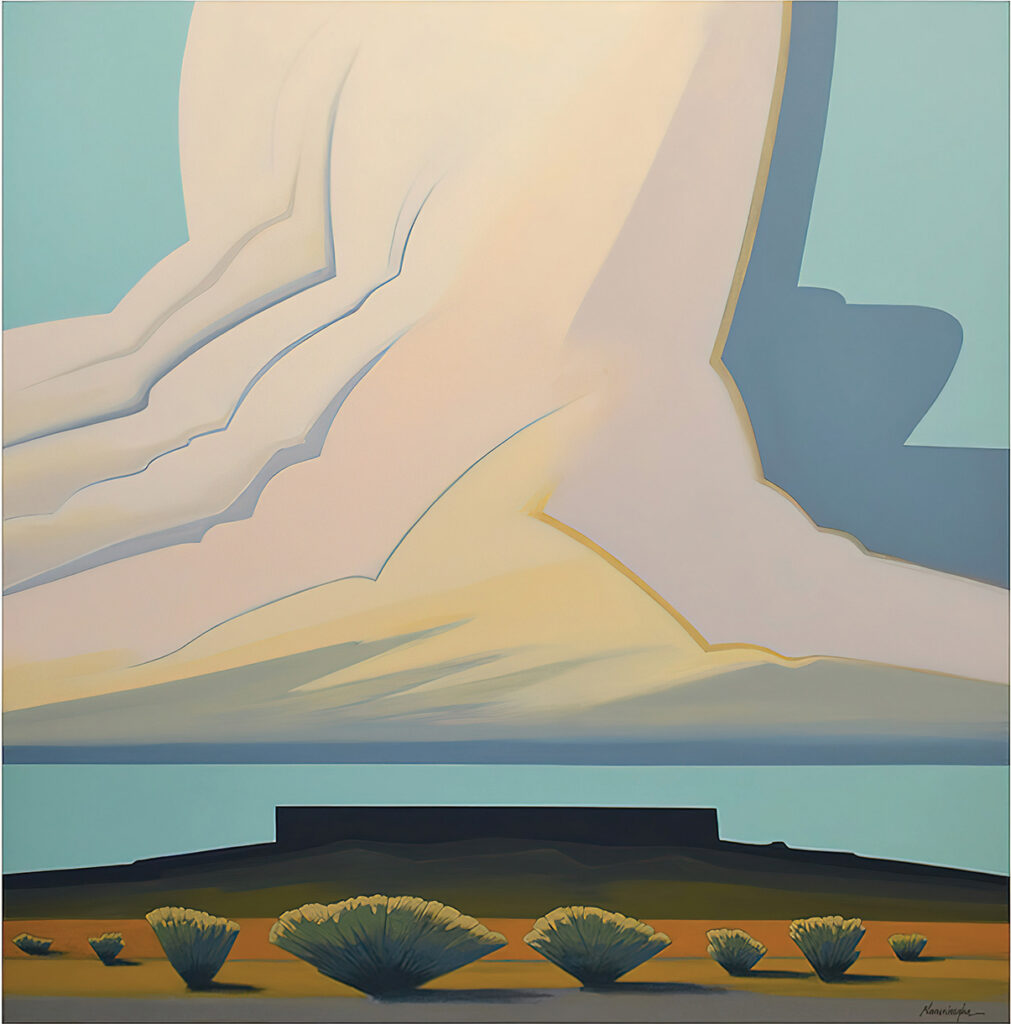
YOU KNOW THE images: grass so dry it crackles at a glance, cloud-strewn skies that stretch to forever, and burnt-orange mesas with tops sheared flat as a knife’s edge. These are the images of the West, a place that artists and storytellers since time immemorial have taken inspiration from.
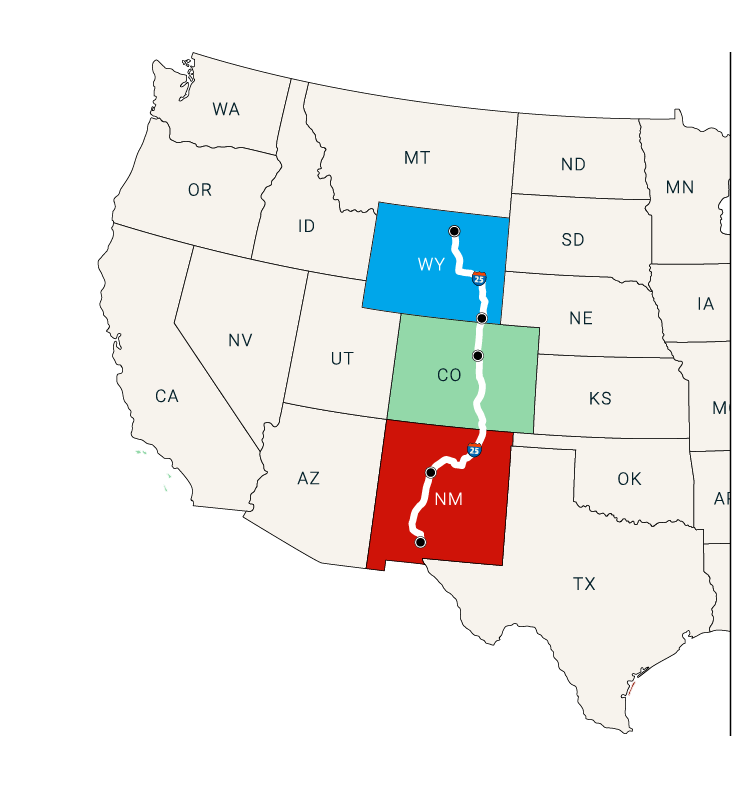
Driving the I-25 corridor from the desert basin of Las Cruces, along the Front Range of the Rockies and on to the high plains of Wyoming provides not only a rich sample of classic western landscapes, but also of the ways that artists have viewed these places.
Which is not to say every artist on this list falls into the loose category of a “landscape artist,” or that every institution is a “Western institution.” What these people and places share is a sense of space. How it’s expressed takes on various forms, whether in musical compositions imbued with the desert, dramatized cowboy drawings for the covers of pulpy western novels, or a century-old art collection with a newly reconsidered relationship to the region.
You’ll find them all along this thousand-mile stretch of road. Rather than take them in as a unit, though, think of them more like the stars of a constellation, each one a distinct form, connected by place as much as by myth. Visit them one by one or string them together to form your own story of the West—past, present, and future. Happy trails.
New Mexico
Las Cruces
Mexican Retablos
The nation’s largest public collection of Mexican retablos—religious images painted on tin plates and found materials—can be found on the campus of New Mexico State University. University Art Museum’s crown jewels number around 2,000. The mostly anonymous nineteenth-century artifacts on display are complemented by a rotating selection of contemporary artwork, and a full slate of programming ensures the borderland’s contributions to the art world no longer go unsung (or unsigned). uam.nmsu.edu
Las Cruces
Sharbani Das Gupta
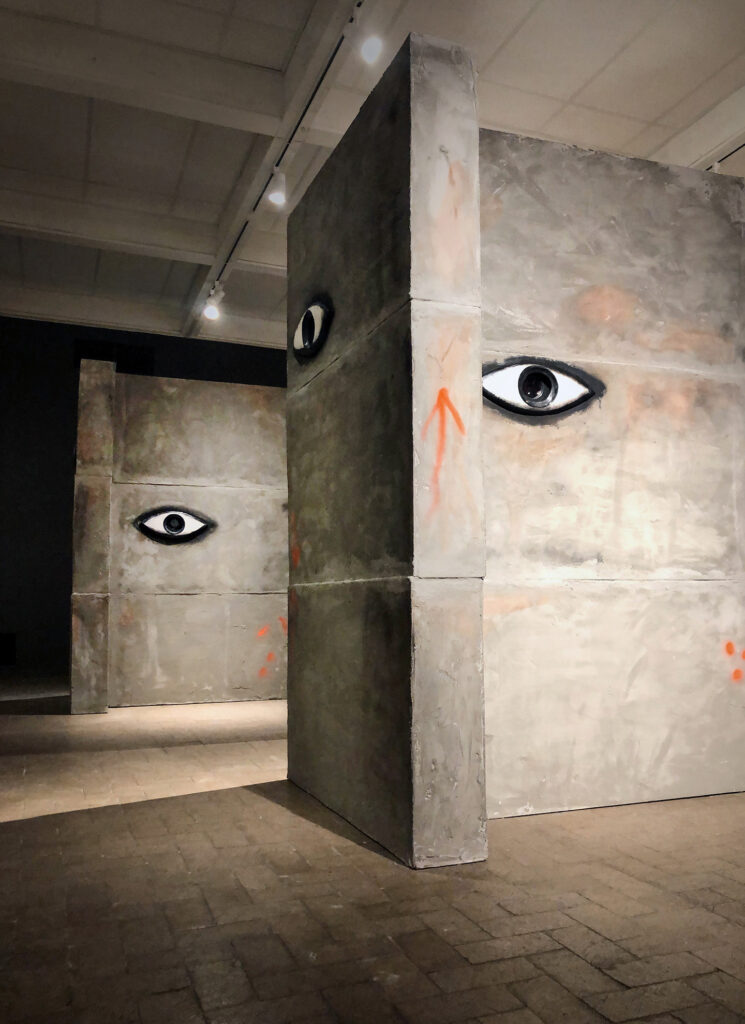
Sharbani Das Gupta is a ceramicist, printmaker, photographer, and filmmaker. If there’s a thread through her many forms, it’s the human connection to land. “How we connect to the earth has a lot to do with how we connect to each other.” sharbanidasgupta.com
Albuquerque
Lithography
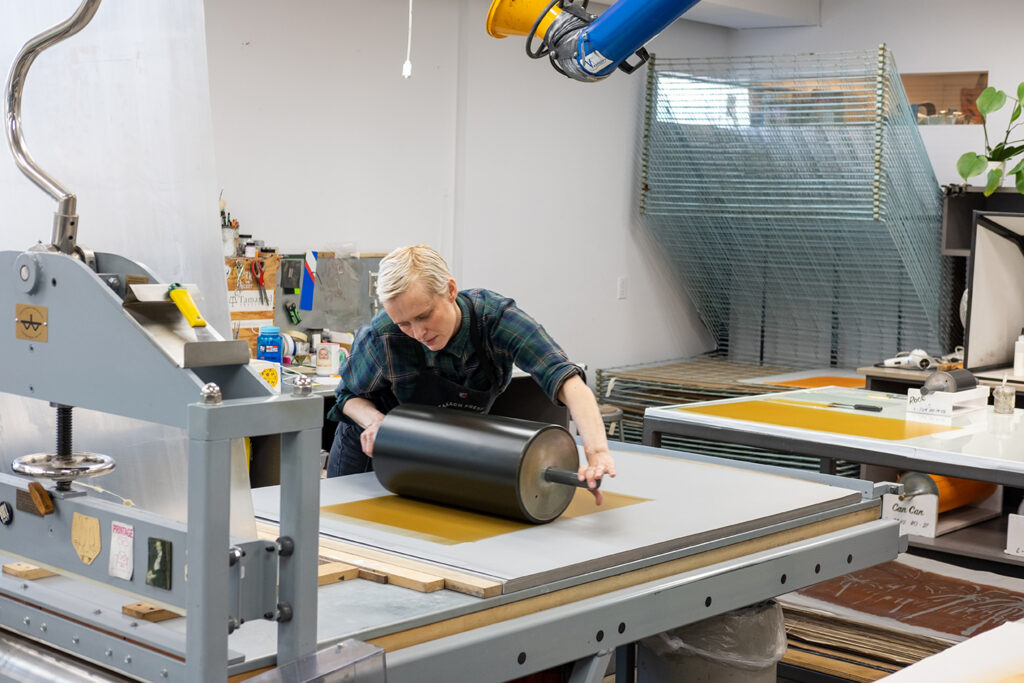
Lithography thrives at the. Tamarind Institute thanks to its visionary founder, June Wayne. The institute is deeply collaborative in spirit, with a crop of new releases from artists every year adding to its more than 8,000-work archive. Visitors can request a viewing of archived prints with advance notice, while the on-site gallery rotates exhibitions every few months. tamarind.unm.edu
Albuquerque
Raven Chacon
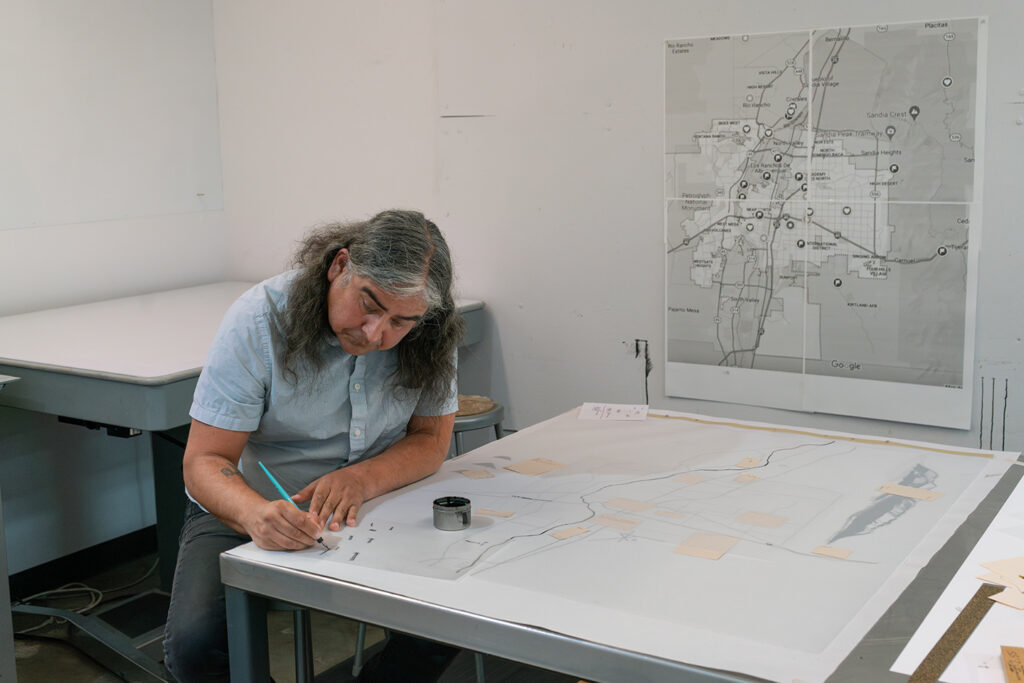
Raven Chacon, performer, installation artist, and Pulitzer Prize-winning composer was born and raised in the Navajo Nation. His work is collaborative, and occasionally involves entire municipalities, like his 2025 composition Tiguex with twenty overlapping movements across the entire city of Albuquerque. spiderwebsinthesky.com
Santa Fe
New Mexico Museum of Art
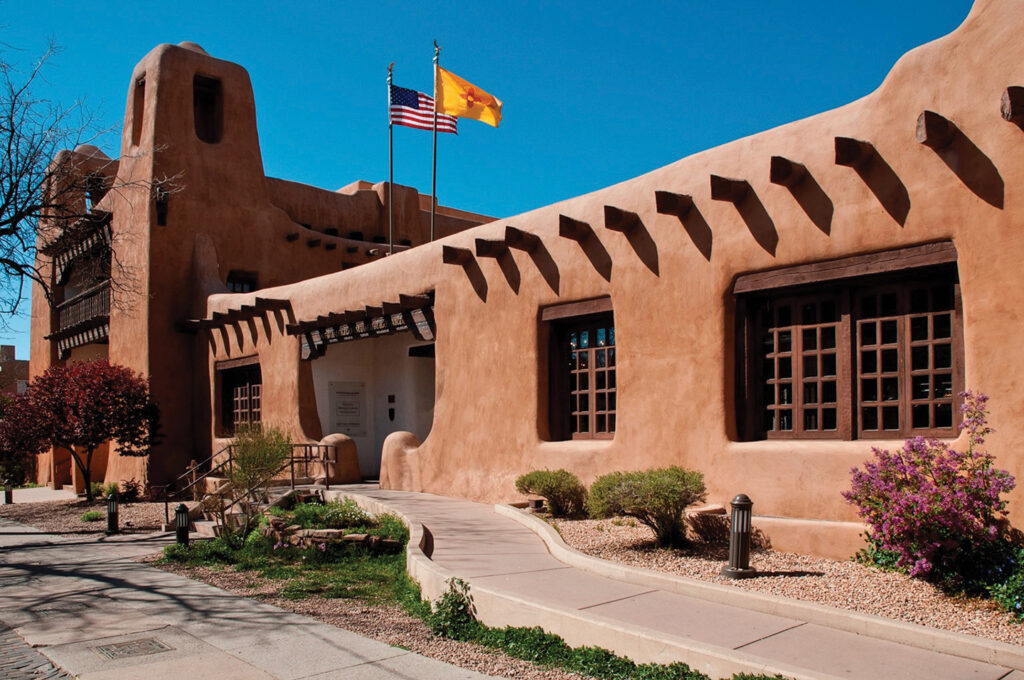
For a two-stop survey of Santa Fe’s abundant art scene, head to the New Mexico Museum of Art. One ticket grants access to both the historic plaza building, founded in 1917 as the state’s first repository for fine arts, and Vladem Contemporary, an extension opened in 2014 in the Railyard District to focus on work made post-1980. nmartmuseum.org
Santa Fe
Dan Namingha
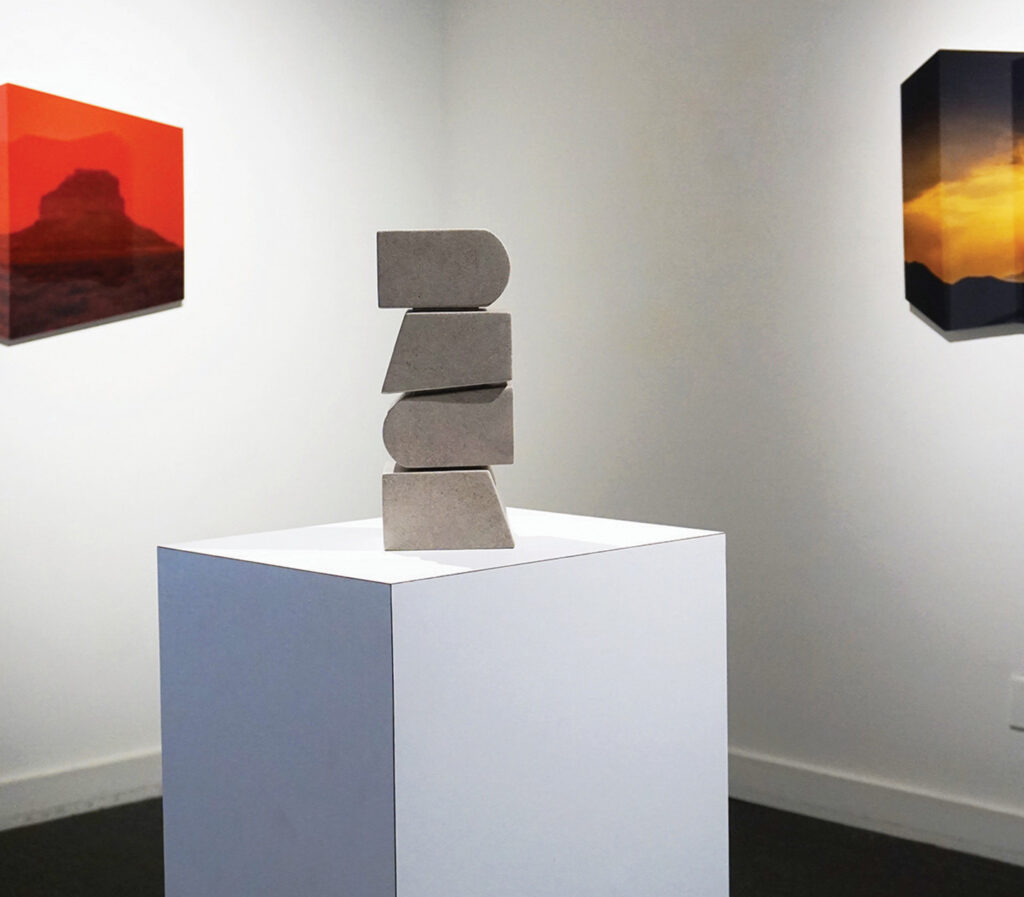
Art is family, business, and family business for Dan Namingha, a Hopi-Tewa painter, printmaker, and sculptor who shares a gallery space with his sons Arlo, a contemporary sculptor, and Michael, a mixed-media printmaker and photographer. All three are descendants of the Nampeyo family, a respected ancestral line of Hopi potters. Find the family’s work at Niman Fine Art, near the historic Santa Fe Plaza. namingha.com
Wyoming
Big Horn
The Gallatin Collection
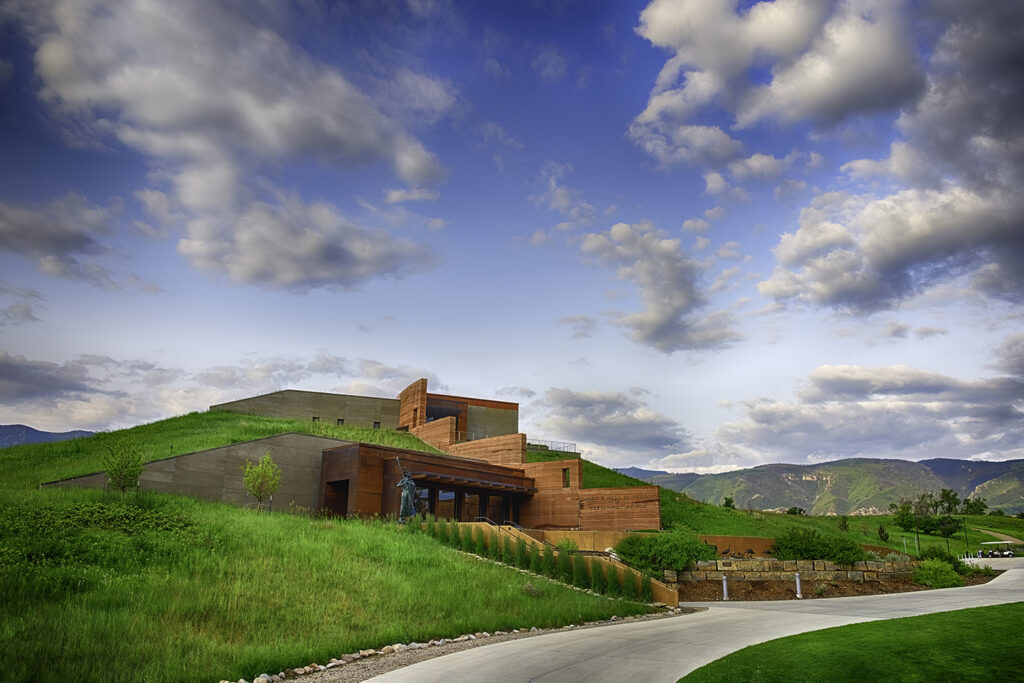
About thirty miles north of the I-25 terminus is the Brinton Museum in Big Horn (just outside of Sheridan). Taking center stage is the collection of Edith and Goelet Gallatin, who moved west from New York in the 1910s. Edith is said to have befriended locals from the Crow tribe and was given artifacts during her time in Wyoming. For years the collection was stored at the Art Institute of Chicago until candy magnate Forrest Mars Jr. built the nearly $16 million museum in 2015 to move the collection closer to its original home. thebrintonmuseum.org
Clearmont
Artist Residency
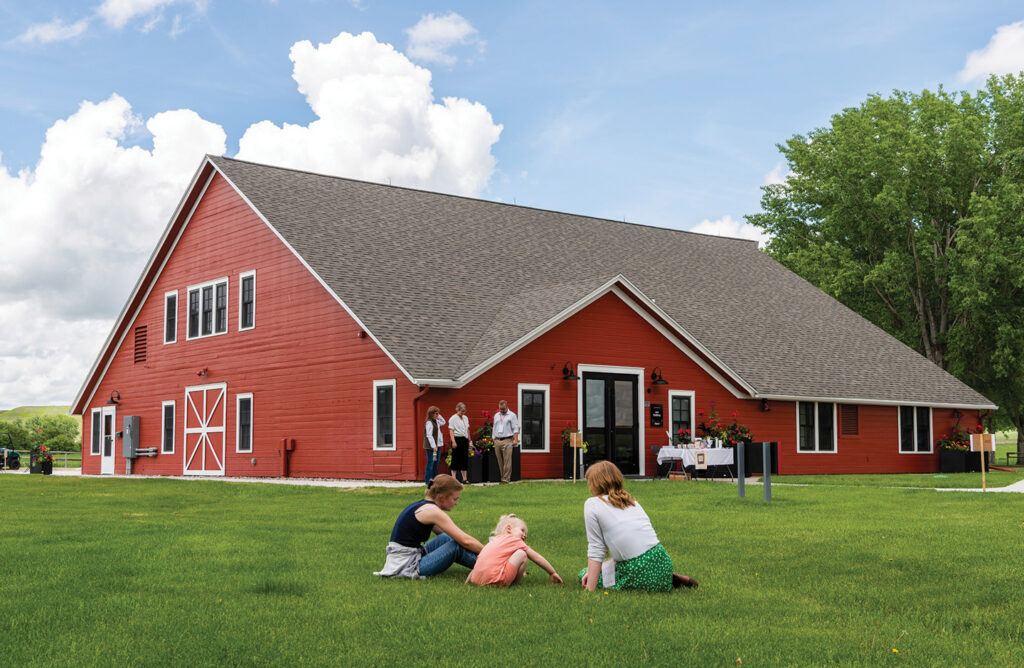
North of the I-25 terminus is the Ucross Foundation, a 20,000-acre ranch best known for its artist residency program and illustrious alumni list stacked with Pulitzer Prize, Tony Award, Academy Award, and MacArthur “Genius” grant winners. Lesser known is the center’s art gallery, which often features work or curation by Ucross fellows, and is free and open to the public Monday through Saturday. Pack a picnic lunch and grab a cold beverage from the café next door to enjoy on the expansive grounds. ucrossfoundation.org
Laramie
Experimental Photography
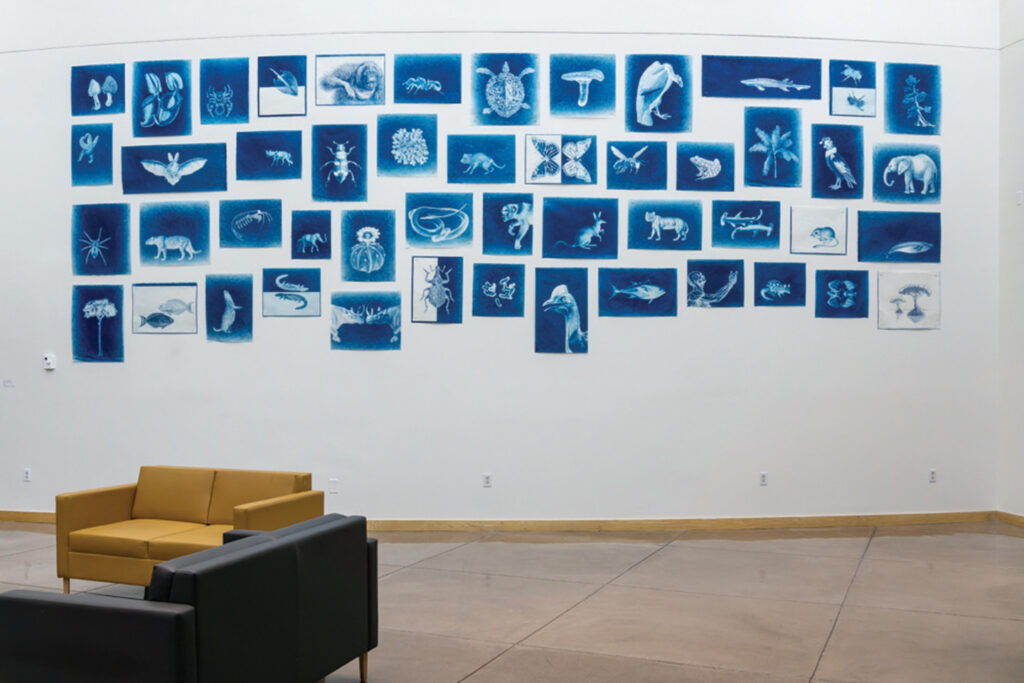
Laramie isn’t technically along I-25, but it is the next art-filled stop for those who detour at the Wyoming border and make a break for Yellowstone National Park. Here you’ll find the University of Wyoming Art Museum, along with a talented roster of artist-professors teaching in the art department. Among them is Bailey Russel, a photographer whose photo-making processes—think tintypes, cyanotypes, wet-plate collodion, and other experimental devices—are as interesting and integral to his photographs as the image itself. uwyo.edu/artmuseum

Casper
Contemporary Art
The Nicolaysen Art Museum, better known as the “Nic,” doubles as a contemporary art museum and a hands-on art-making center in Casper. Curation tends toward artists from the central Rockies and High Plains, and the shows rotate regularly through the airy galleries. The Nic also houses a colorful, two-story “discovery center,” with painting stations, a puppet theater, and other family-friendly activities. thenic.org
Colorado
Green Mountain Falls
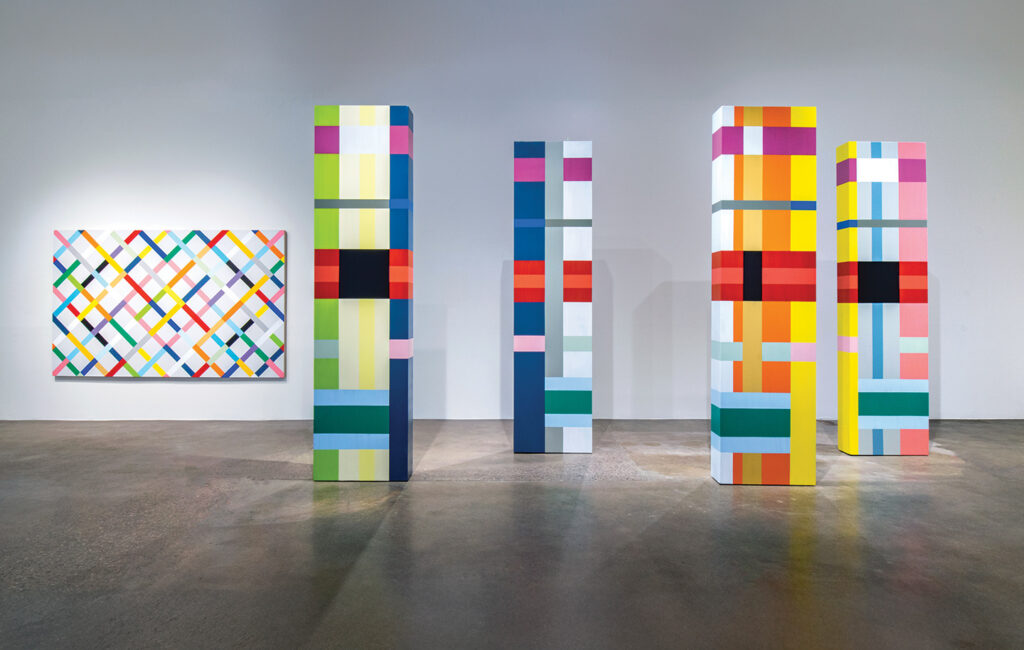
Painted Columns
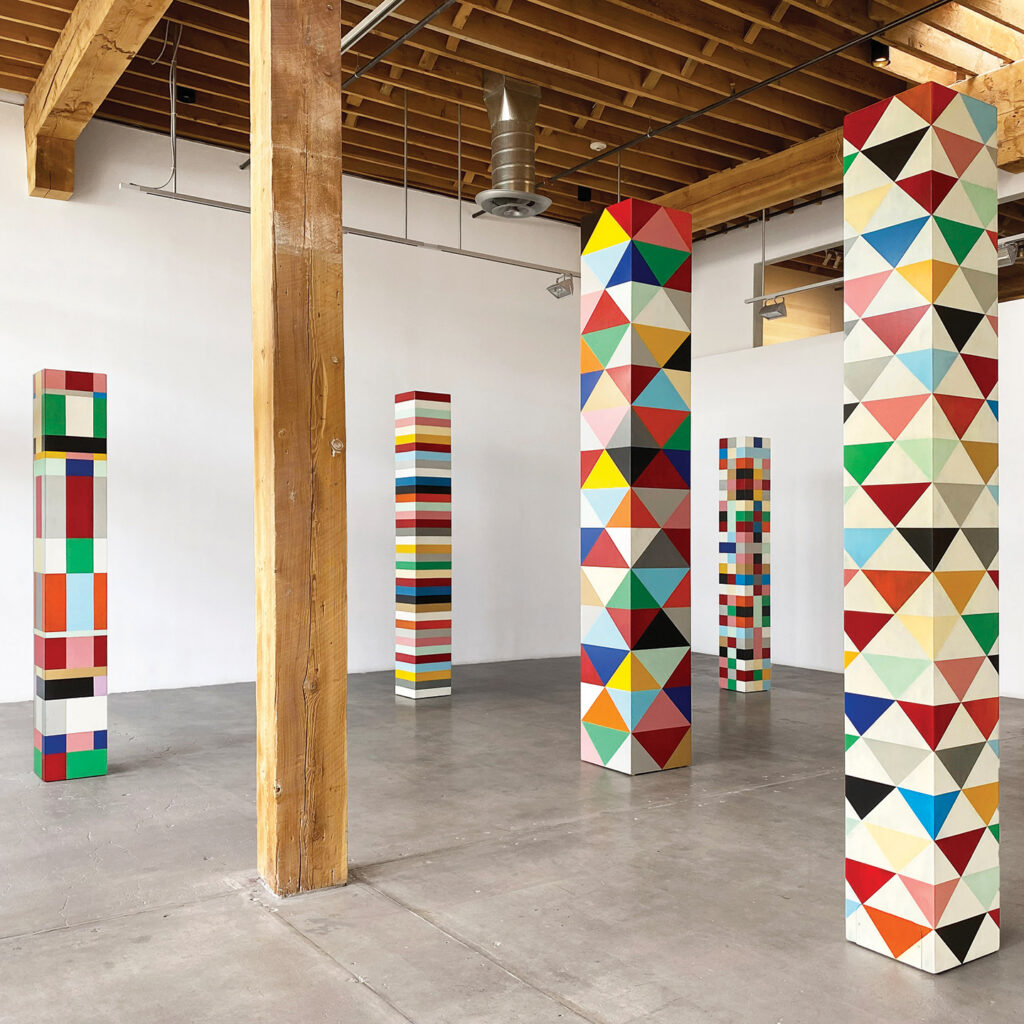
Tucked into the mountains just northwest of Colorado Springs is Green Mountain Falls, with an average population under 1,000 and some of the region’s most engaging public art pieces. Green Mountain Falls is home to the studio of Pard Morrison, a contemporary sculptor who constructs his signature painted columns in the town’s decommissioned gymnasium. pardmorrison.com
Colorado Springs
Native & Historic Art
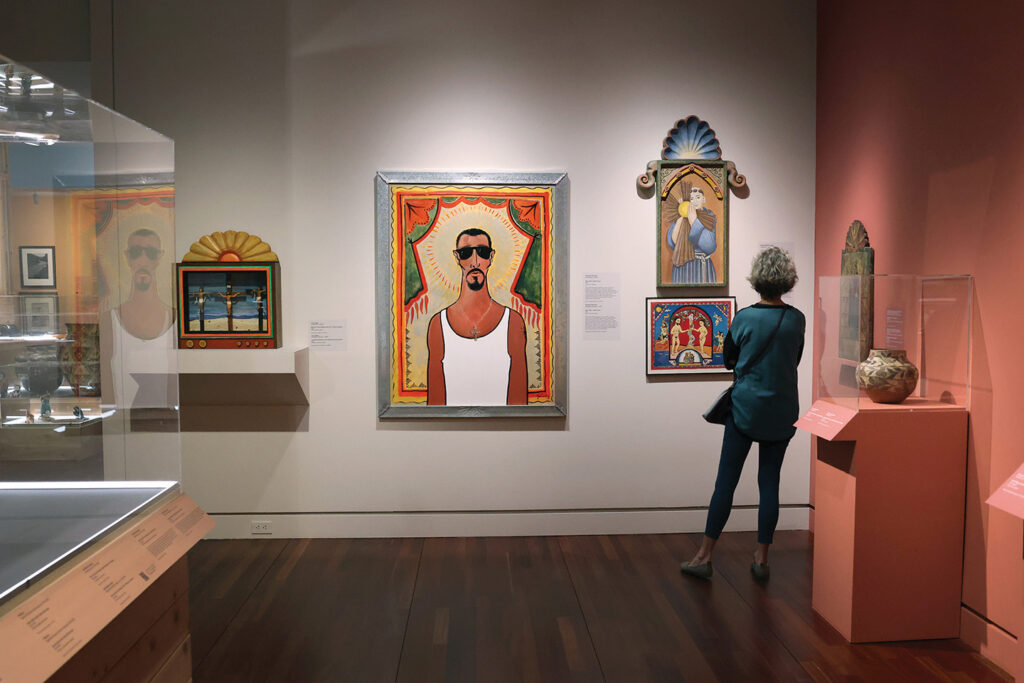
The Colorado Springs Fine Arts Center at Colorado College has existed since 1919, when artists studied at what was then called the Broadmoor Art Academy. In 2025, the museum refreshed its display of the permanent collection to represent the region, with a four-gallery mix of contemporary and historic Native works; santos, a living tradition of devotional pieces; and East Coast painters that influenced the school’s early students. fac.coloradocollege.edu
Trinidad
Western Art
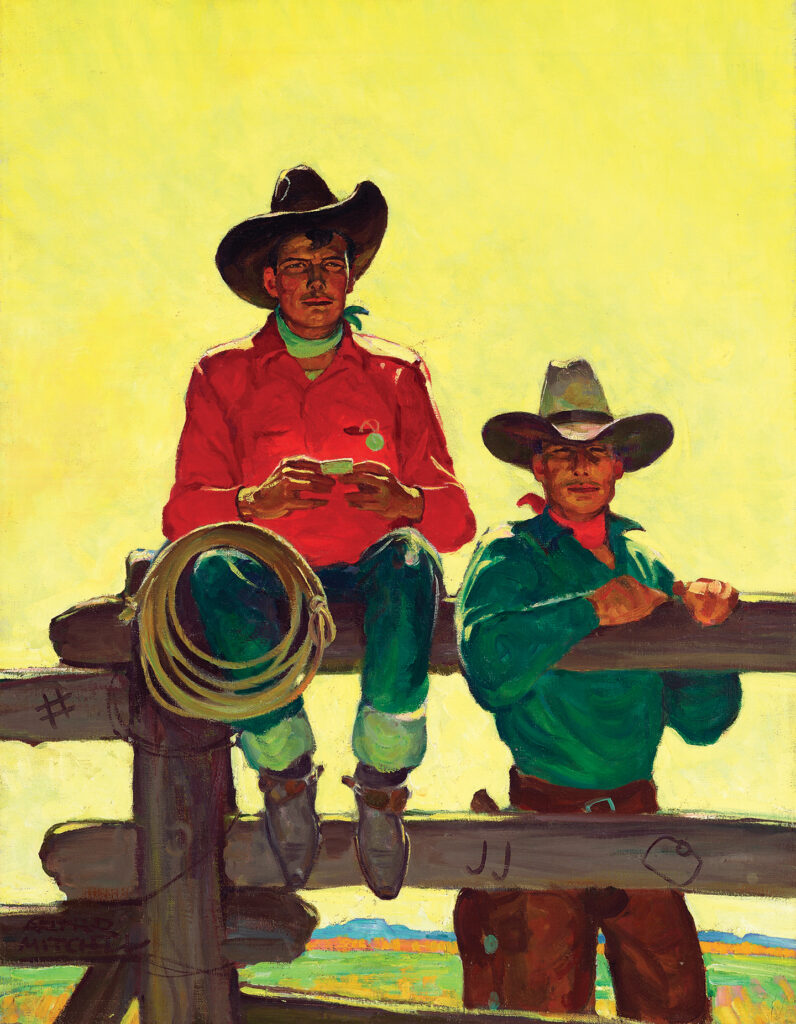
If other institutions whisper of the Wild West days, the A. R. Mitchell Museum of Western Art screams it. This historic building on Trinidad’s main drag houses the nearly complete collection of Arthur Roy Mitchell, who spent the better part of the twentieth century immortalizing his hometown in the height of its cowboy days, from dramatic landscape paintings to pulpy Western-novel covers. armitchellmuseum.com
Trinidad
Kuehl Fine Art
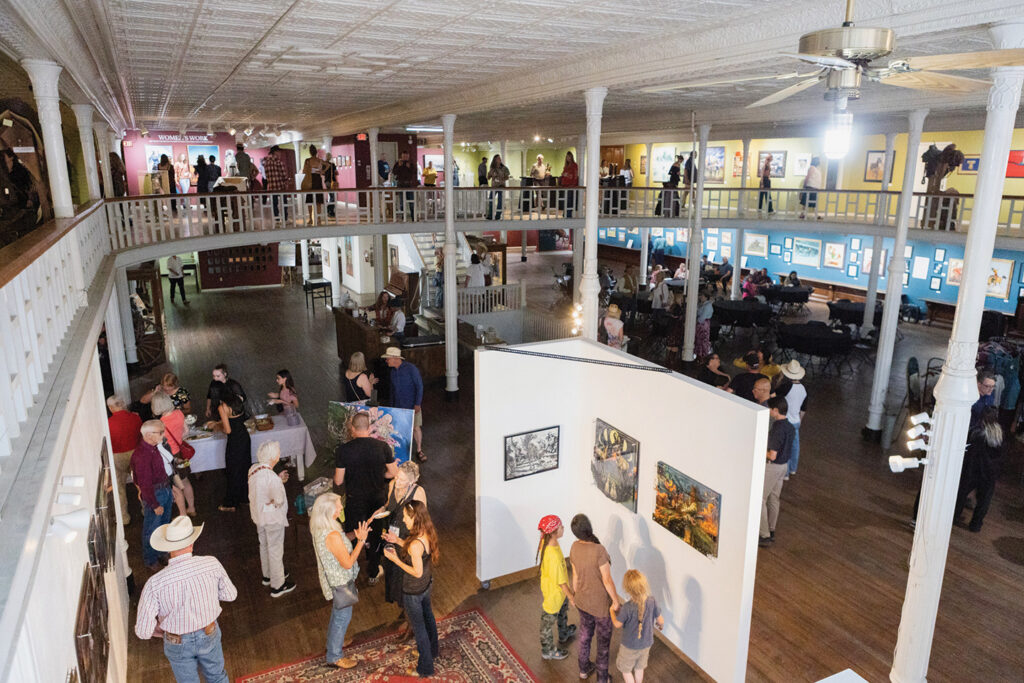
If the early cow-town imagery of A. R. Mitchell leaves you wanting more, look no further than the door. The front quarter of the museum is occupied by Kuehl Fine Art gallery, dedicated to expanding the cadre of Western art by slinging contemporary artists like Peggy Judy, Tony Thielen, and Maia Chávez Larkin. @kuehlfineart
Pueblo
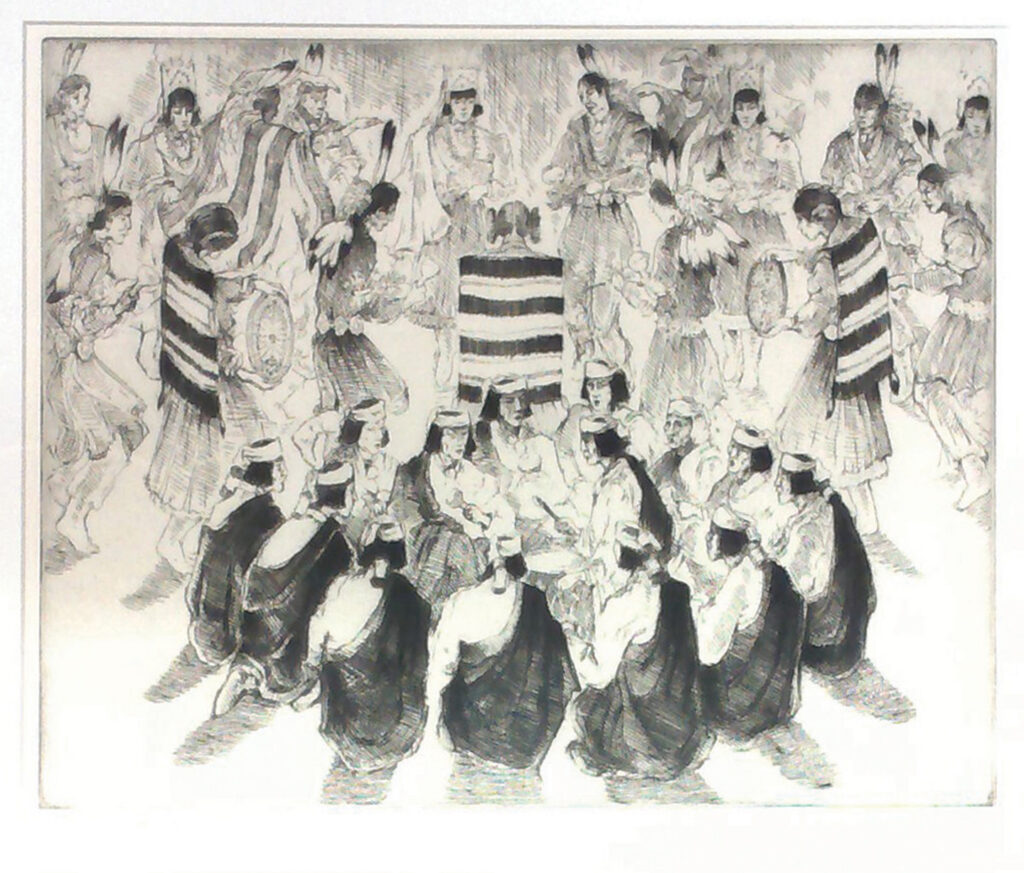
Gene Kloss Prints
The Sangre de Cristo Arts Center is the long-serving anchor of Pueblo’s vibrant scene, with six galleries, a dance school, an arts school, a performing-arts venue, and a children’s museum. Of particular interest is the permanent display of Gene Kloss, an artist from the 1920s Taos art colony, where she began producing intaglio prints. sdc-arts.org
Pueblo
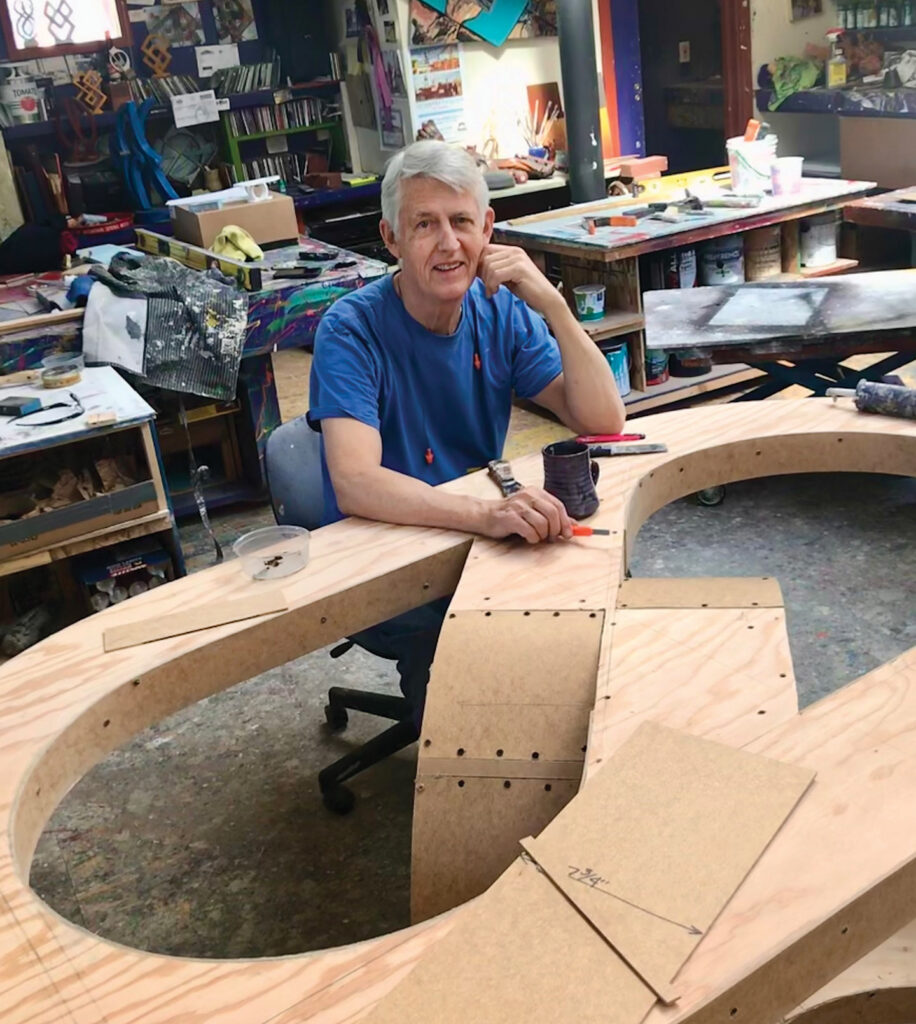
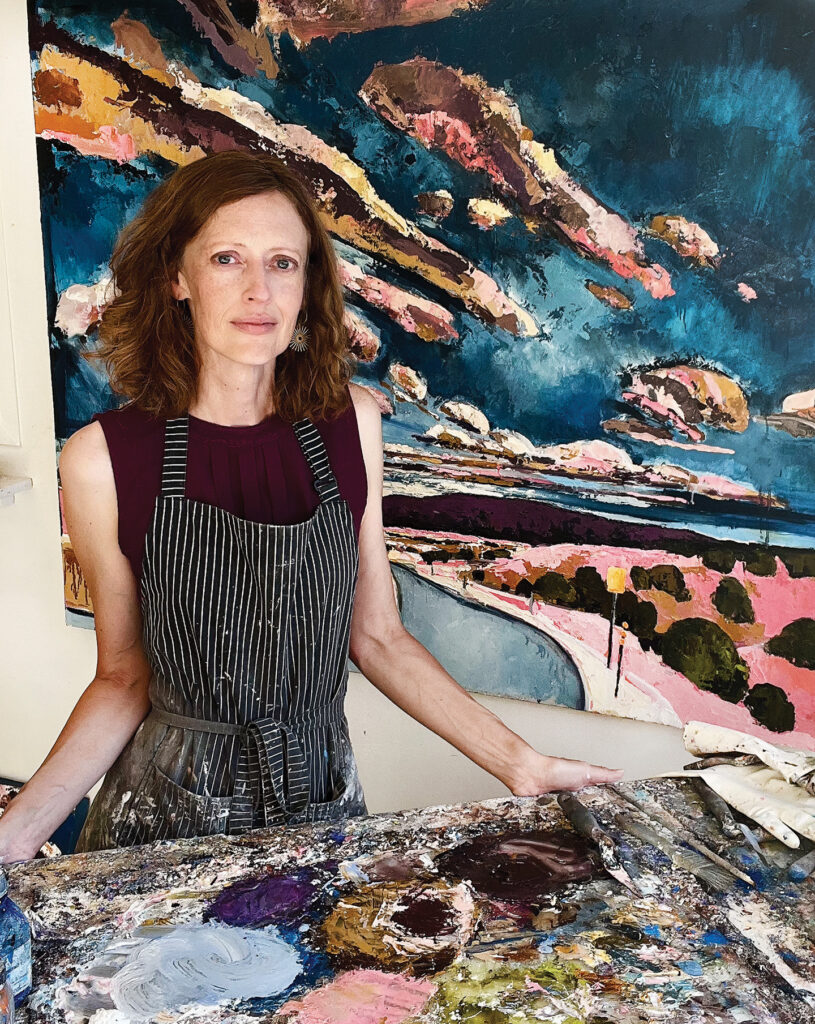
John & Meghan Wilbar
In 2009, sculptor John Wilbar told the Pueblo Chieftain that he hoped his hometown of Pueblo would become a place where young artists could stay and make work. “It may be a pipe dream,” he told the local paper. Today, Wilbar’s daughter, Meghan Wilbar, is an accomplished contemporary artist, whose paintings are visions of Pueblo’s hulking steel mill and open roads, with the painter’s perspective always tilted upward, eyes toward the clouds, feet planted in Pueblo. johnwilbar.com and meghanwilbar.com
Denver
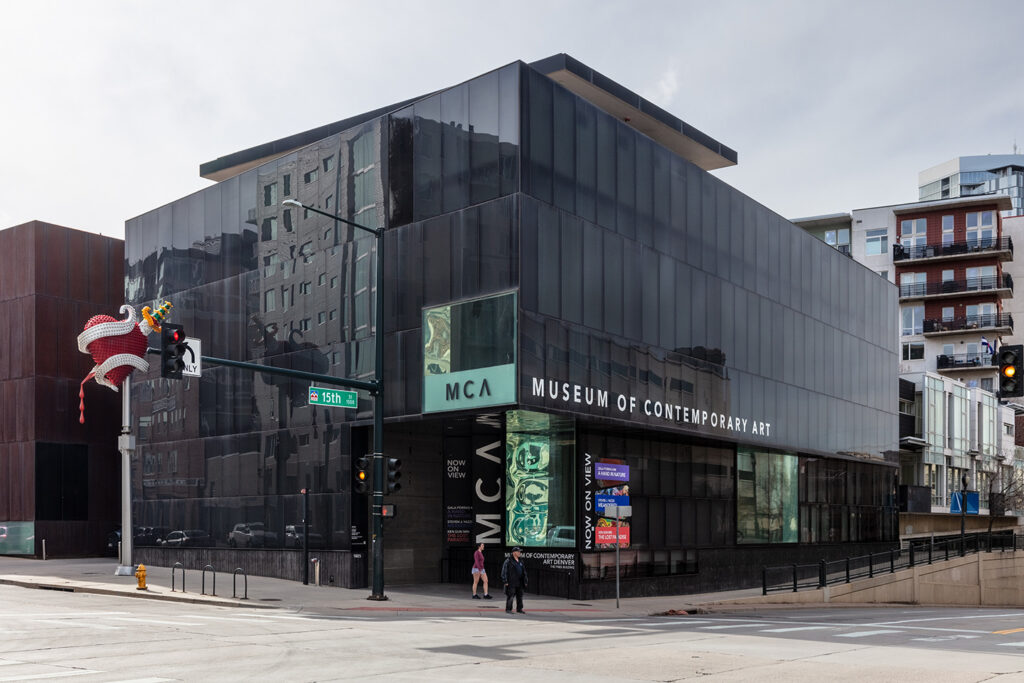
Contemporary Art
True to its name, the Museum of Contemporary Art Denver is concerned only with what is contemporary. The museum’s only mandate: to show work of this time. To execute its mission, the museum doesn’t collect art, but rather uses its resources to commission new work, dedicating its four stories to a rotation of international, national, and local artists. mcadenver.org
Museum of Walking
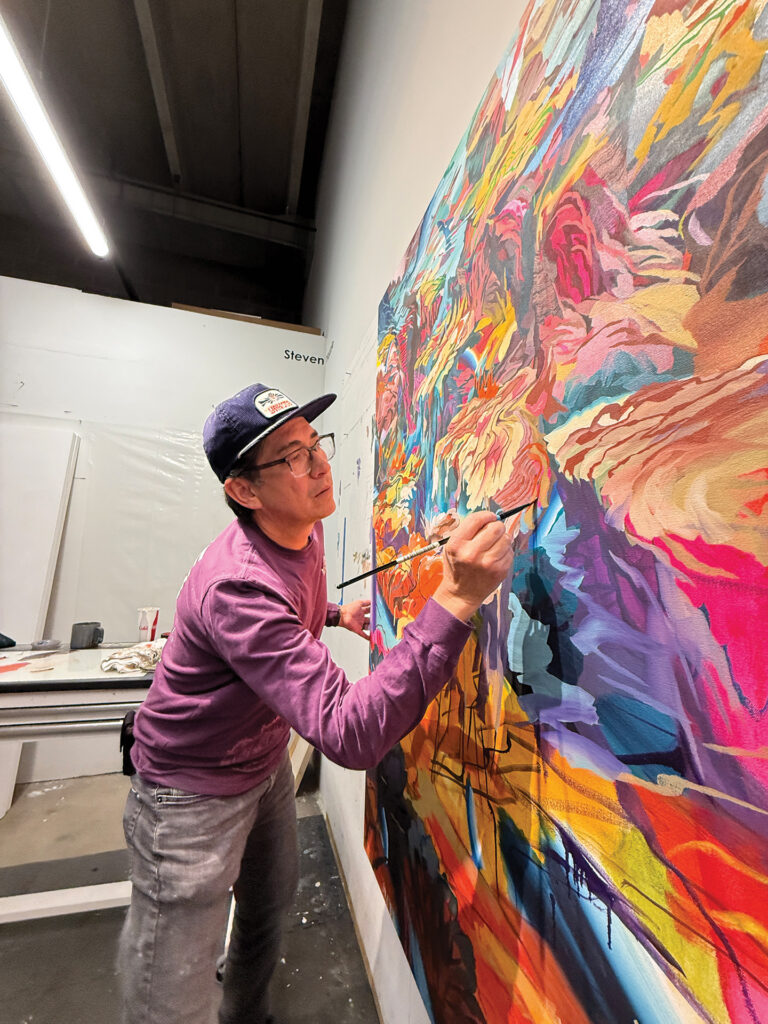
Steven J. Yazzie
Steven J. Yazzie is all over the West. Some of his work intentionally centers that movement; Yazzie is a co-founder of the Museum of Walking, which researches and leads walks as an artistic practice. Other works are a by-product of motion. His ongoing “Drawing & Driving” project, for instance, consists of drawings made while pedaling a custom bike; while his “Drifting & Painting” series was created during a river raft float. yazziestudio.com
Keep It Moving
THERE IS A stretch of road between Colorado Springs and Denver where the cities give way to miles of forested mountains and rolling prairie hills. Much of that open space is the result of the Douglas Land Conservancy, a citizen initiative formed in 1987 to prevent the Colorado’s largest and second-largest cities from merging into a giant megalopolis, paving over thousands of acres of habitat for bears, bobcats, antelope, coyote, elk, foxes, and small mammals. But what good is all that conserved land if the wildlife can’t use it?
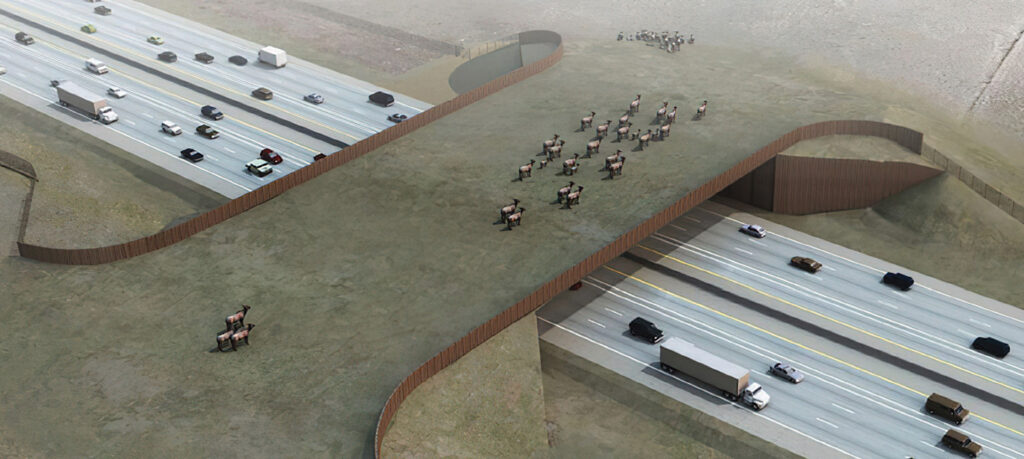
Since 1996 the Colorado Department of Transportation has partnered with county, state, and federal agencies to shore up an eighteen-mile stretch of I-25 known as “the gap” by adorning it with miles of wildlife fencing, five underpasses, and sixty-three “escape ramps” for animals stuck on the wrong side of the fence.
The decades-long project reaches its high point with the Greenland Overpass, a 40,000 square-foot bridge that is covered in native grasses and spans six lanes of highway. And while driving beneath a herd of elk heading to their wintering grounds is majestic on its own, the main point of the project is safety—fences and crossings are shown to reduce wildlife vehicle crashes by about 80 percent.
Colorado is considered a leader in animal infrastructure, but only a handful of crossings are above ground, the preference of large, skittish ungulates like pronghorn that hesitate to use the tunnels without the advantage of clear sight lines. And that’s exactly what the citizen activists worked to establish almost forty years ago: a road with a view.