Connect More
NO STRANGER TO COLLABORATION, DANCER AND ARTIST STEPHEN PETRONIO SHARES HIS NEXT ACT.
BY Larry Keigwin | PHOTOGRAPHY BY Christian Witkin
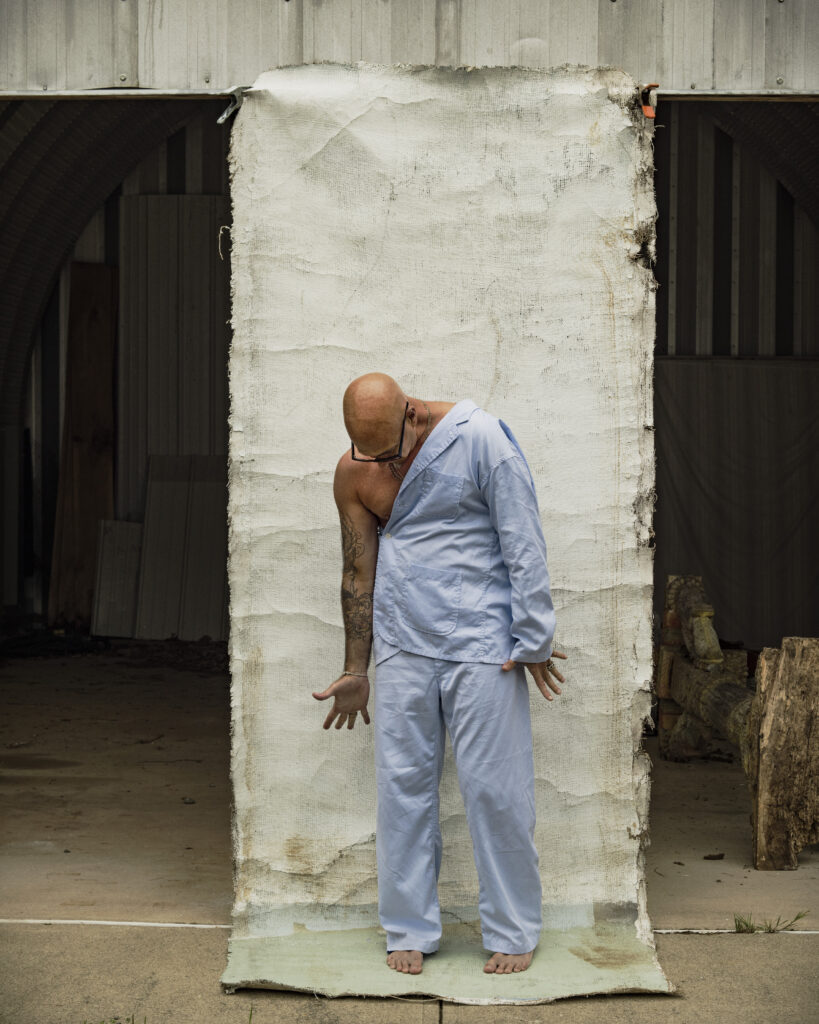
FOR STEPHEN PETRONIO, dance and visual art go hand in hand. Winner of the American Choreographer Award, the New Jersey native and son of a truck driver draws inspiration from visual artists and has created more than thirty-five original works for his eponymous dance company. Here, he speaks with ArtDesk dance editor Larry Keigwin about his latest creation, the Petronio Residency Initiative.
LARRY KEIGWIN: So you live in Putnam County [in New York]. Tell me about that and your new residency space.
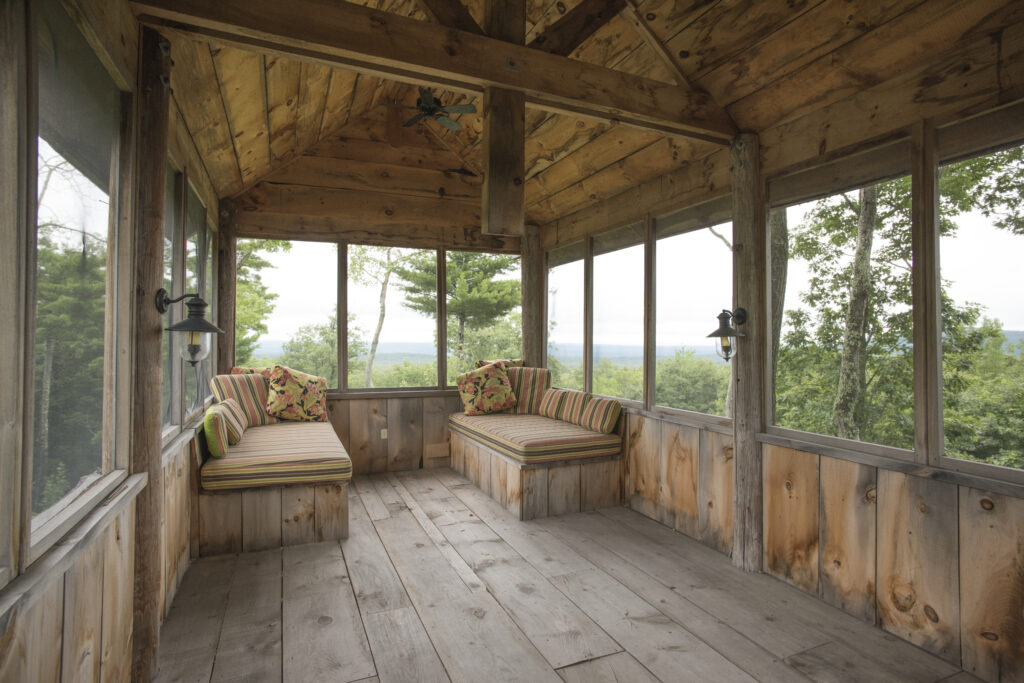
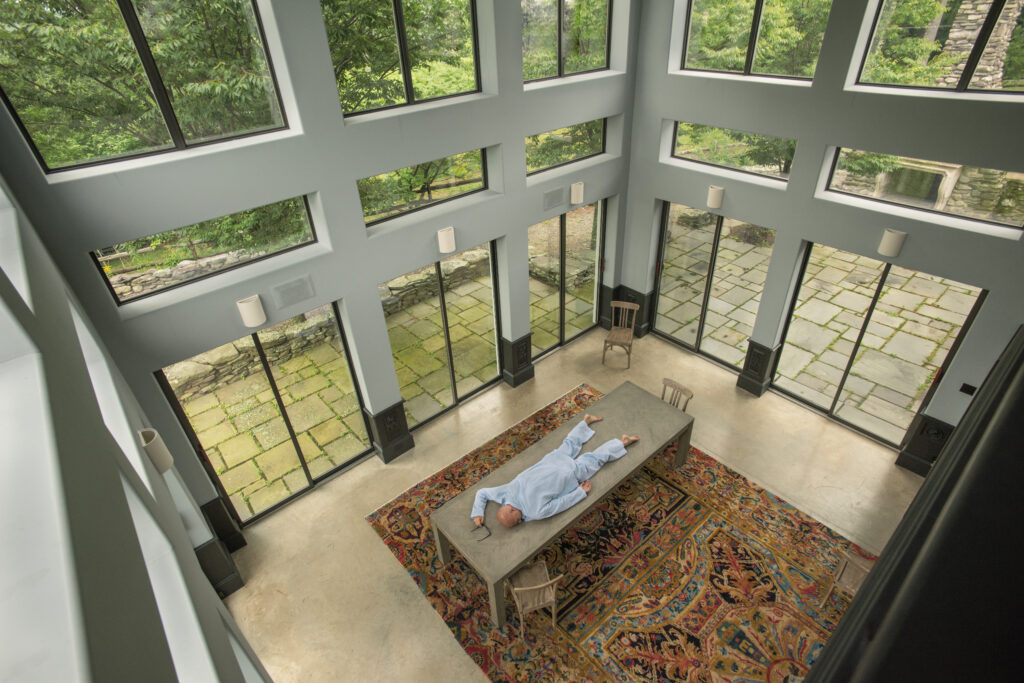
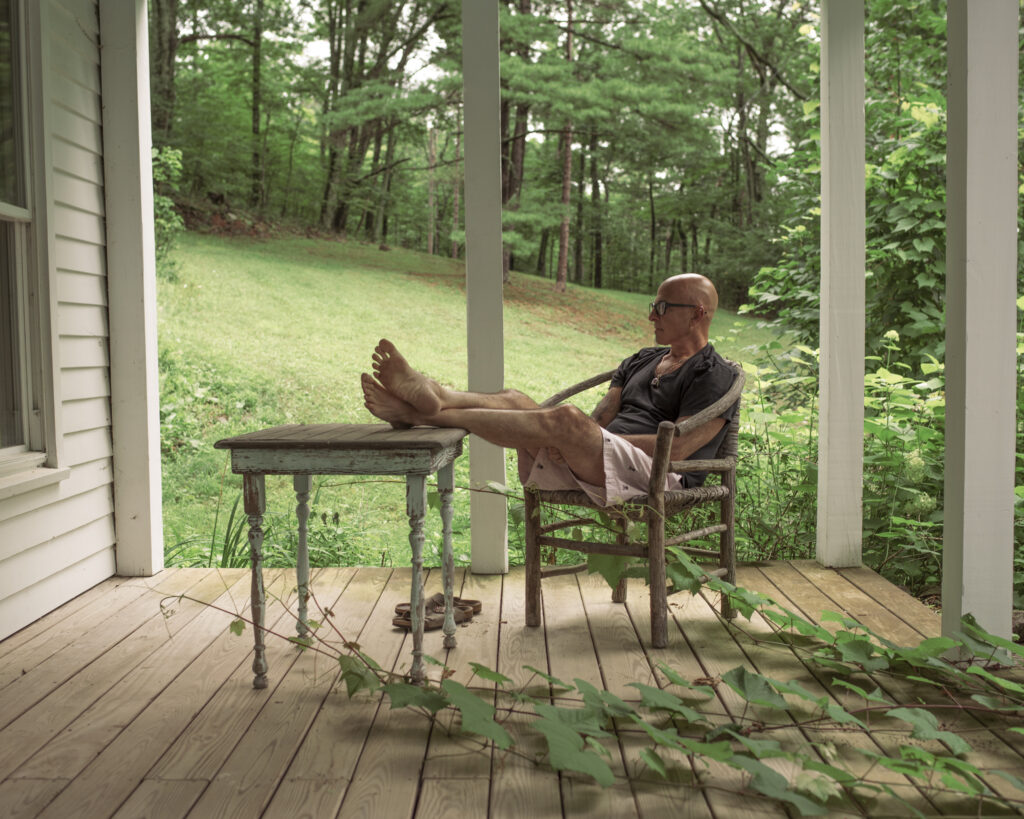
STEPHEN PETRONIO: So, I moved to Putnam County about twelve years ago—after 9/11—and I live in an amazing rural farmhouse. We just put that up for sale because my company bought a 175-acre forested mountaintop residence in a place called Round Top, New York, which is about ten miles outside of Catskill in Cairo, New York. Right now it’s called PRI at Crows Nest, which is the Petronio Residency Initiative.
The plan right now is to have four other artists/companies for summer, each with a two-week paid residency. Cindy Sherman contributed the organic garden to the space, so my husband is putting that in. So hopefully the food will be all grown on site or at least, if not all of it, most of it—otherwise locally sourced. My idea was to give people a little bit of heaven while they’re working.
That sounds great!
It’s really up to you how you use the situation. There are no requirements. You don’t have to make anything. You can just come and read if you want to! You can come as an artist. If you’re selected, you can come on your own or up to eight to ten people.
When I started to really get it together, I realized that two weeks is a beautiful thing, but really the power of this is going to be how I interact with other similar [residency programs] because, I’ve discovered so many other places that have a similar interest.
I’m trying to link arms with more of these people to create a network. For example, if you got selected, you would come for two weeks for me, then two weeks to Jacob’s Pillow and two weeks to X, Y and Z, and then end up in the Lumberyard in Catskill, and then you would end up in New York City. If you got onto this circuit, you would actually be able to make a dance.
I love that idea. I’ve always thought it would be great to be on a circuit of residencies where it’s the trajectory of making a dance—one residency space would be early creation the final space would be a technical residency.
This is the idea I’m working with. We have audio and video equipment, but we have no production value and we have no performance space on my venue nor do I really want it. Originally I thought we’ll have a theater but, you know, that idea of reproducing all the same resources over and over again is really, in a way, very wasteful. I mean—it’s not bad, but we don’t all need to have the same thing. We need to collaborate. I hired a great director named David Szlasa, and hopefully he will help me to build that network.
Can you tell me about your trajectory into American modern dance?
I’m the son of a truck driver and a homemaker. I went to Hampshire College to study medicine. I went to a public high school in New Jersey. I was the first child in my family to go to college, and I took a dance class on a recommendation of a girl I was chasing around. I have really good feet, so everyone was, like, “oh, my gosh, you should be a dancer.” So I just continued taking classes while I was studying my pre-med courses, and then somewhere in that first year a thunderbolt struck, and I realized that—in a very visceral crazy moment—I’ve got a body and it’s pretty powerful.
I met Steve Paxton that first year who is the inventor of contact improvisation and a wonderful visionary improvisor. I did my final thesis in dance and moved to New York to study dance. I met Trisha Brown my first year out of college and became her first male dancer. I was choreographing all along, so I worked there for seven years while I was making my work, and then I left because my company was getting a lot of work.
I’ve always admired how you include contemporary visual artists in your work—sculptors, designers, costume designers, sets, music—what has influenced your interest in contemporary visual art?
Trisha Brown and [Merce] Cunningham, have this model of working with contemporary music and contemporary visual arts. So my training is very unclassical—I don’t have a classic training. I don’t read music. I didn’t study ballet. You know, with them, I started dancing in college, and I really did not know very much about contemporary arts, but when I met Trisha, she brought me into the world of visual art.
So the first couple of weeks, she asked me to come to dinner at this guy, Bob’s house. I was, like, “well, Bob who?” She said Bob Rauschenberg, and I [asked] “well, who is Bob Rauschenberg?” You know, one of the greatest artists of the twentieth century. After I met him, I ran home and looked him up in the encyclopedia because there was no internet at the time, and then I realized who he was, and that began my long love of visual arts.
We both just came back from a DanceMotion USA tour. What did you learn from your DanceMotion USA tour and where did you go?
So we went first to Thailand, which was incredible. We were performing in state opera houses. We performed in the Hanoi Opera House in Vietnam, and then Singapore, it was kind of a little black box, but in Thailand we were in big and small theaters. It was really interesting to be at the top of the performance world there.
We also worked a great deal with children and adults with different disabilities—from blindness to deafness to spinal cord injuries to autism. I’ve made a couple of works for differently abled companies in the past. Sometimes we’d have fifty people in a class with all different levels of ability and all different kinds of disability.It was an interesting attempt to bring dance to as many people as possible.
I learned that no matter what you have going on in your body, you still have a body, and even if you’re just moving your eyebrows or breathing, that is a connection that you can share with somebody and that was pretty beautiful.
I love that.
It’s a pretty moving experience, and for all the difficulty, I’m very grateful to get motion into them and to the state department for putting that in front of us, and we’re going to start folding that into our mission. We’re going to start training to get more skilled in working with disabilities.
Are there any artists today that you’re working with or have your eye on that really excite you?
I’m in the middle of a long collaboration with Janine Antoni who is a sculptor and performance artist. This is the fourth year. We’ve made a number of works together both for the stage and now we’re making objects together. So I’ve begun making visual objects, which I’m super excited about. We’re both around the same age and kind of in the same places in our careers, and we’re kind of using each other to start over again in another field. And it’s really fun to have that conversation going on.
So one last question—this is a tacky question—how old are you? You’re still dancing and what is that like?
[Laughter]. I’m not even old. I’m 61 and, you know, most recently I did a solo with Anna Halprin, [who is ninety-seven] and she made it when she was in her eighties.
I thought I was done at fifty, and I’ve been sneaking back every now and then to do something. Anna has really opened up a door for me, and, you know, it doesn’t have to be Olympian physical feats all the time.
Exactly.
Anna has this level of subtlety that I have really not that much experience with, and it’s so much fun to be opened up in that way by her. So we’ll see what happens next.
Learn more about the Petronio Residency Initiative and the Stephen Petronio Company at petron.io.