By Dancers, for Dancers
Dancers Responding to AIDS founder Denise Roberts Hurlin speaks with ArtDesk dance editor Larry Keigwin about her career, advocacy, and the storied Fire Island Dance Festival held in Fire Island Pines on Long Island.
BY Larry Keigwin | PHOTOGRAPHY BY Scott Shaw
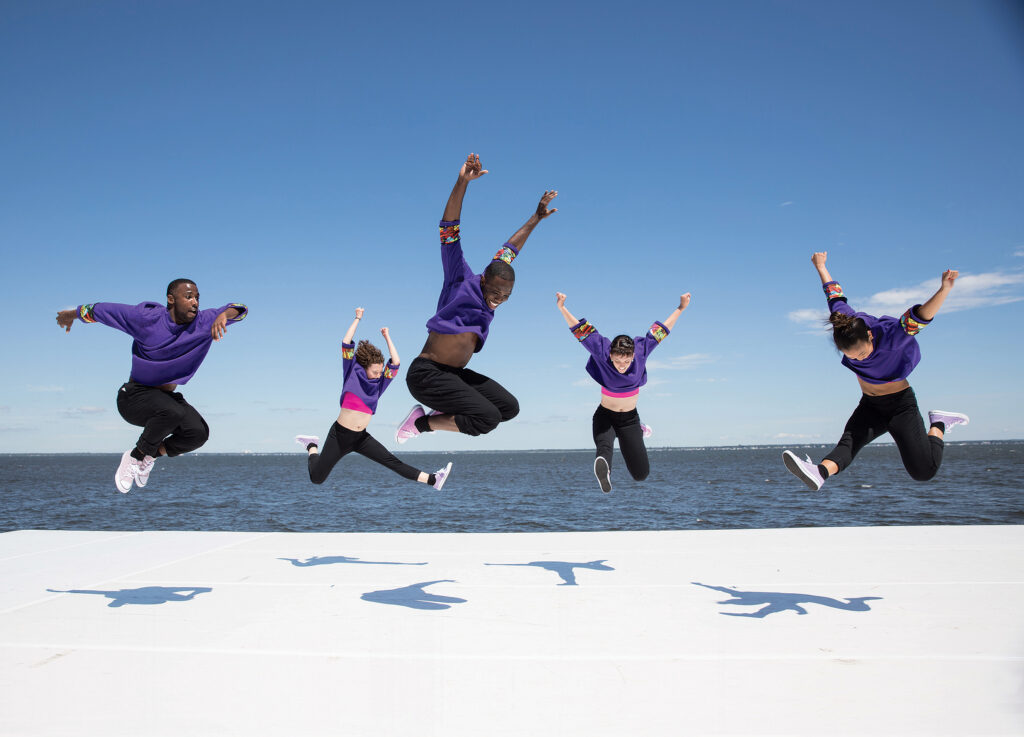
Dancers Responding to AIDS—a nationwide program of Broadway Cares/Equity Fights AIDS—creates awareness and provides support to performers who are fighting the virus. In 1991, Denise Roberts Hurlin, along with Hernando Cortez, founded the program in the early peak of the crisis. Hurlin speaks to ArtDesk dance editor Larry Keigwin about her career, advocacy, and the program’s signature event, the storied Fire Island Dance Festival, held in Fire Island Pines on Long Island in New York.
LARRY KEIGWIN: Denise, you are a leader in the arts and also a leading dancer in the arts. Can you share just a little bit about your career as a dancer?
DENISE ROBERTS HURLIN: I discovered modern dance in college. Paul Taylor’s work captured my inner soul. So, as with a lot of dancers, just because that’s what your dream is doesn’t mean it happens right away! With a lot of tenacity and perseverance, and the right timing—someone leaving was just my size—I auditioned for the Paul Taylor Dance Company and got in. Six weeks into my first tour, I tore my ACL.
During my recovery time I started to volunteer for God’s Love We Deliver—which was on Eighty-Sixth Street and Amsterdam Avenue—in the basement of a church. It was a defining moment for me because it was the first time in my life that I realized there was something else giving me joy and value.
LK: Here you are in the mid-to-late ’80s, and the AIDS crisis is affecting the dance community in New York. Can you take us through that?
DRH: 1985 was the first time that someone could get an HIV test, but they counseled you, like, Oh, do you want to know the results because we can’t help you—this is more for statistics. I remember feeling like, How is that possible, right, that we can’t help you?
I think she meant it in a more direct way, that the medicine isn’t going to help you, but I interpreted it literally. As I continued on with my career, many people began to become ill and get very ill and die. “Where’s so and so?” “Well, he passed away,” and you’re like, “What do you mean? You’re like, “I don’t understand. What are you saying?”
It happened quite frequently. There were two gentlemen in the Taylor company who became ill, Jeff Wadlington and Christopher Gillis. Gillis was a seminal figure in Paul’s work. In the golden era of Paul Taylor, much of that vocabulary, much of that repertory, was created on this man. It was hard for us. Jeff Wadlington was twenty-seven years old when he was diagnosed, and he died by the time he was twenty-nine.
As a dancer, you eat, live, travel, you do everything together—this is your family. It became very apparent by 1991 that we needed to do something. So Hernando Cortez said, “Dee, we’ve got to do something, right?” It was about our voice being heard at that time. It wasn’t so much this idea of active fundraising; it was pay attention to us. Look what’s happening to our world.
LK: A huge moment.
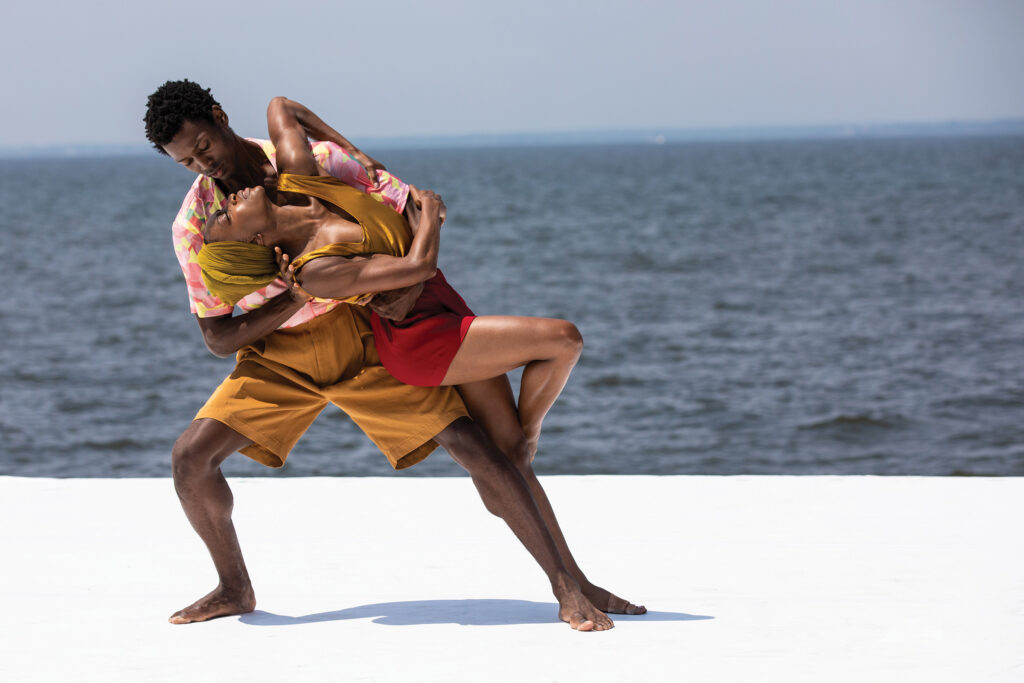
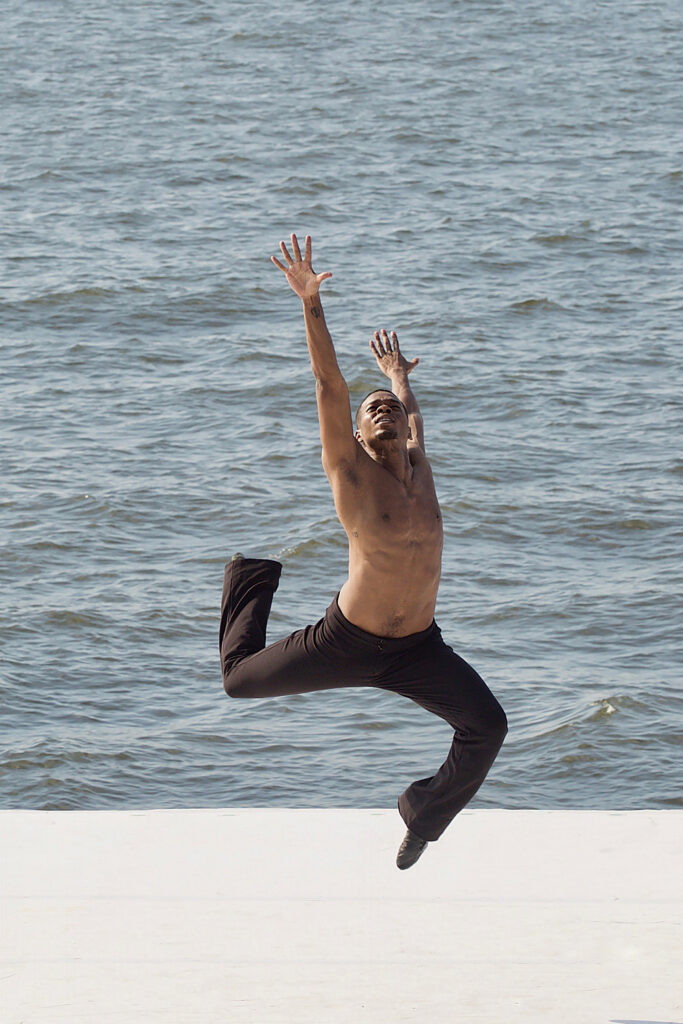
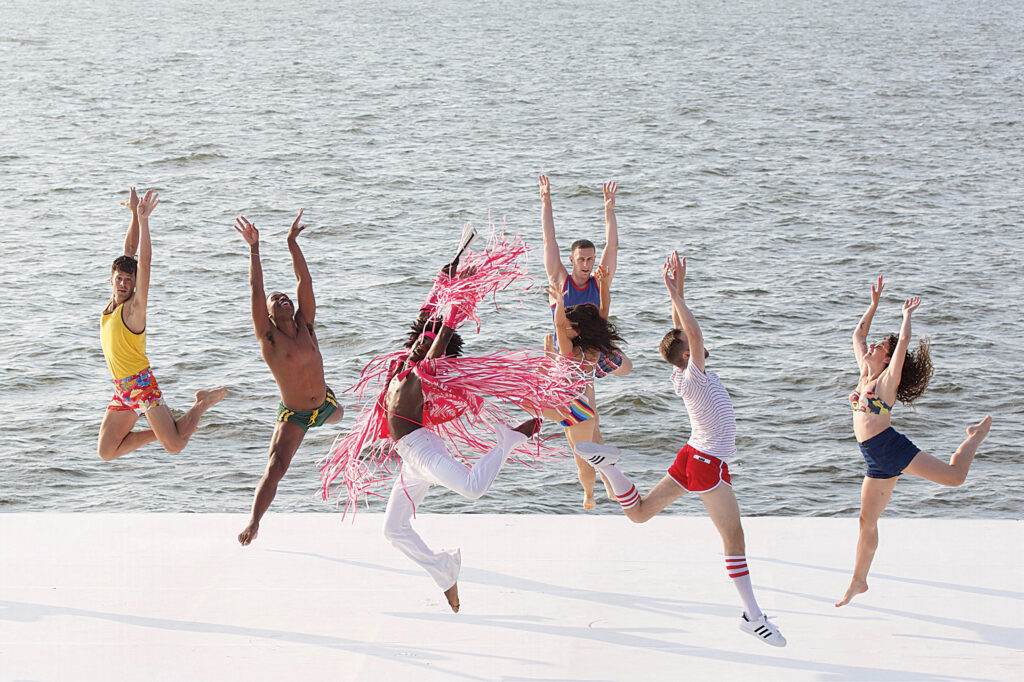
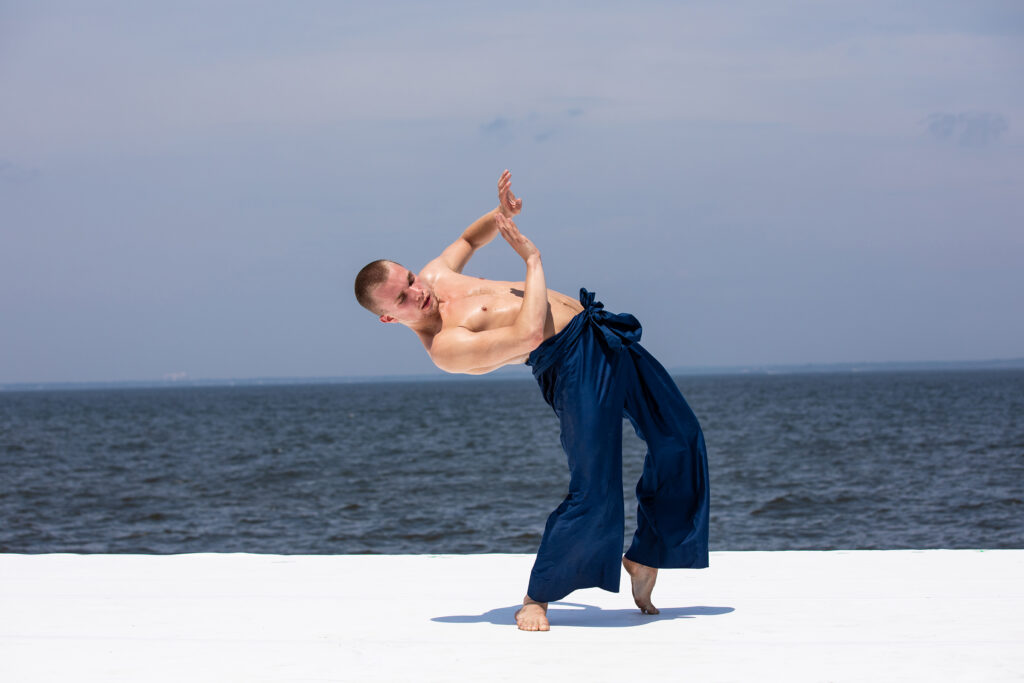
DRH: We began at the Pride parades. We would jeté and do grand combinations down Fifth Avenue. We would gather together as Dancers Responding to AIDS.
In 1993, at a parade, we literally kept running into the group ahead of us. Finally Tom Viola, the executive director of Broadway Cares/Equity Fights AIDS, turns around and he’s like, “Who are you people?” And I’m like, “We’re Dancers Responding to AIDS.” He says, “Maybe you should come talk to me.” Suddenly by August 1993, DRA was a program of Broadway Cares/Equity Fights AIDS.
It was about responding to people dying and providing for those as they were dying. In 1995, Hernando and I produced our first event, and we went gangbusters. We did a concert at the dance museum in Saratoga. We were at Martha’s Vineyard. We did something at The Yard. We did something out in South Hampton, and then, of course, Fire Island. Youth is a beautiful thing, right? You don’t know what you’re really getting into.
LK: Can you give us a little sneak peek on this year’s program for the Fire Island Dance Festival?
DRH: I felt we needed to acknowledge and speak about the loss that we’ve all communally shared [through Covid] in so many different ways. The lineup includes Jacqulyn Buglisi’s Requiem, which is often shown prior to the beginning of Table of Silence, her piece for September 11. We have a lot of pieces that are acknowledging freedom and joy; two principals from National Ballet of Canada, Harrison James and Ben Rudisin, will perform romantic male duets choreographed by Joshua Beamish; and Caleb Teicher and Abdiel Jacobsen will perform a new work. This will be the first time that a nonbinary couple is being presented.
The moment the sunset hits the skyline—you can’t believe it’s real what you’re seeing, to see beautiful dance in front of it. It’s hard to describe.
LK: It’s spectacular. It is one of my most special memories of dancing. Not only does DRA help people who are ill, but you are commissioning artists. Your support extends in so many directions.
DRH: The fundraising that we do comes in many ways such as special events like Fire Island Dance Festival, but also through the red buckets that you see when attending a performance. It’s a communal effort, whether on Broadway or at Danspace Project. It’s all going to the same place.
The money is raised and distributed through our national grants program. Last year about $7.8 million was awarded in grants, and almost $7 million awarded from The Actors Fund. That’s a tremendous amount of money for these artists and service organizations.
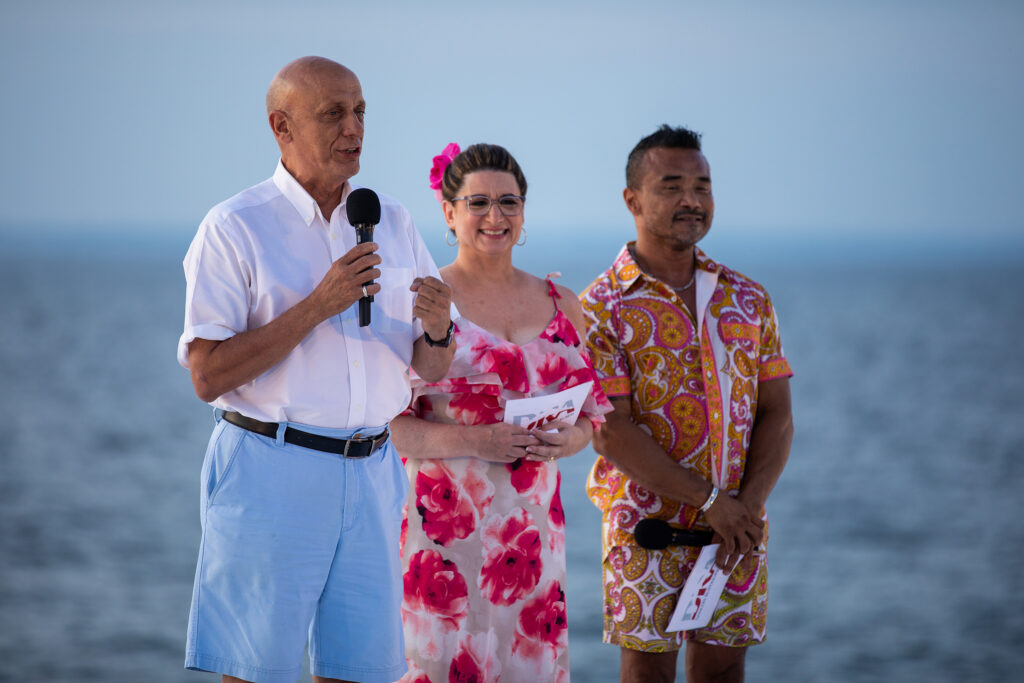
Whether you’re in New York City or at the Tulsa Ballet, this is the outreach. It’s really amazing. A total of $57,500 was awarded to four organizations in Oklahoma last year by Broadway Cares: Other Options, RAIN-Oklahoma, Health Outreach Prevention Education (HOPE), and Tulsa CARES.
LK: Does Broadway Cares/Equity Fights AIDS only support people who are suffering from AIDS?
DRH: Our program has expanded beyond the mortality of AIDS. Initially, our founding was because of people dying of AIDS but in 1996 when protease inhibitors were introduced to the market, lives were beginning to be prolonged. At that point, it was providing for people who were living with AIDS. Then, the first program that we started to fund—apart from the AIDS initiative—was the women’s health initiative out of The Actors Fund, for women struggling with serious illness, mostly cancer-related diagnoses. That now includes the Friedman Health Center, a career center, an insurance center, and for the past two years Covid emergency assistance for artists.
LK: That’s awesome. Before we end, I want to ask about your daughter, Catherine, who is now a part of American Ballet Theatre. I mean, did you ever—I mean, obviously she started dancing young—did you ever dream that you’d have a daughter who is a ballerina soloist?
DRH: When she was little, it was obvious that she was a dancer. She had this propensity for it. A natural gift.
My husband had a house in New Hampshire, and we thought about leaving New York, as people do. It will be cheaper, then I thought, Am I going to be driving to Boston all the time because she’s going to have to take class? The possibility of success is always in the back of your mind, but she realized it. As you know—dancers—we are compelled to do it. You do it out of this compulsion to say, This is what my life is, and I love it. To do it so young, that’s what I’m impressed by, that they’re so accomplished at such a young age.
LK: Denise, the dance community is grateful for your hard work. There is joy not just in consuming and performing, but also joy in giving back. You are an example of that, so thank you for sharing your experience with us.